Supported Independent Living (SIL) can help people with disability live more independently while receiving support with everyday tasks.
However, common misconceptions can make SIL seem confusing or restrictive. Let’s separate the myths from the facts.
The truth: Supported Independent Living (SIL) and Specialist Disability Accommodation (SDA) are different.
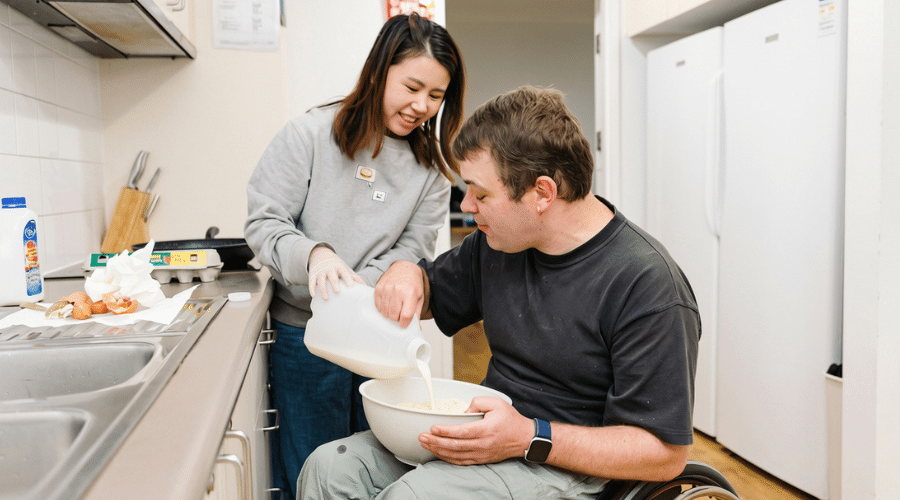
SIL is funding for support workers who help or supervise you with daily activities at home. This may include personal care, preparing meals, cleaning and developing everyday living skills.
SDA is funding for specially designed housing for eligible people with extreme functional impairment or very high support needs.
Some people have both SIL and SDA funding, while others may only have one.
The truth: You have a choice about who provides your NDIS supports.
If your current arrangement no longer feels safe, respectful or suited to your goals, you can explore other SIL providers.
Talking with Cerebral Palsy Alliance – trusted, respected SIL home providers for over 80 years – can help you make confident choices about what kind of SIL home is best suited to supporting your independence and lifestyle goals moving forward.
Not sure whether your current support is meeting your needs? Take our SIL quiz to reflect on what is working and what could be better.
The truth: SIL is based on a person’s disability-related support needs – not on an assumption about their age.
Many of us remember moving out of home for the first time as a young adult. It can feel exciting and daunting, while bringing a new sense of freedom, confidence and independence. For young people with disability, this important milestone can sometimes be delayed or overlooked because of uncertainty about how it will work or whether the right support will be available.
SIL can help make this rite of passage possible in a way that is safe, supportive and carefully coordinated with the young person and their family. For an eligible young adult with higher support needs, SIL can provide assistance with personal care, daily routines, cooking and developing skills for greater independence.
Living with people of a similar age can also make the experience more social and enjoyable. Housemates may share interests, routines and goals, creating opportunities to build friendships, enjoy activities together and experience the milestones of young adulthood.
With the right planning and support, moving into SIL can be a positive next step, giving a young person greater independence while helping their family feel informed, involved and reassured throughout the transition.
CPA is currently inviting expressions of interest for young group SIL homes in:
These homes provide an opportunity for young adults to live with people at a similar stage of life while receiving support from CPA. Explore the listings or contact CPA to learn more about suitability and current availability.
Good to know: to submit a new NDIS application, a person must be younger than 65 on the day their completed application is received.
The truth: Having a pet is not automatically ruled out by SIL.
Whether a pet can live with you will depend on factors such as the property or tenancy rules, the needs of other residents and safety considerations.
If living with a pet matters to you, let us know and we’ll help explore suitable homes, housemates and support arrangements with you.
The truth: Your culture, identity and food preferences matter.
Support may include help with meal planning, shopping and cooking meals that reflect your culture, dietary requirements and personal preferences.
Groceries are an everyday living expense and are not paid for through SIL funding. However, a good provider should listen to your preferences and support your choices wherever reasonably possible.
The truth: SIL is designed to help you live life your way, with the right support – not create a restrictive, one-size-fits-all living environment or separate you from the people you love.
Moving into SIL does not mean leaving your family connections behind. Family and friends can continue to be an important part of your life through visits, phone and video calls, shared meals, celebrations and trips home.
Your preferences, goals, privacy and daily rhythm should help shape how your support is delivered. CPA will work with you and the important people in your life to maintain meaningful relationships while respecting your independence, privacy and choices.
Your home should be a place where you feel comfortable, supported and connected to the people who matter most.
The truth: You may be able to move into a SIL home with a friend or someone you already know.
If you and a friend have compatible support needs and living preferences, CPA can talk with you about suitable homes and whether moving together may be possible. It can be a great way to take the next step towards independence with someone familiar by your side.
CPA currently have homes across Sydney and the Hunter with more than one vacancy that may be worth exploring if you are considering moving with a friend:
Moving together will depend on each person’s support needs, funding, compatibility and the home’s current availability. Speak to CPA about what matters to both of you and which options may be suitable.
The truth: Finding the right SIL arrangement involves much more than matching someone with an available room. At CPA, we take the time to understand your individual health, support and lifestyle needs before recommending a home.
Our thorough process includes:
Our goal is not simply to fill a vacancy. It is to help create a safe, compatible and welcoming home where each person can feel comfortable and supported.
The truth: SIL funds disability-related support provided in the home. It does not pay for everyday living expenses such as rent, groceries, electricity or internet.
Understanding the difference between support costs and household expenses can help you compare living arrangements and prepare a realistic personal budget.
For more information about household expenses and budgeting, download our Costs of Living in a CPA Home Factsheet for practical information and guidance.
The truth: SIL is designed to help you become as independent as possible.
Depending on your needs, a support worker might complete a task with you, provide prompts or supervision, or offer hands-on assistance.
The right level of support is different for everyone. It should help you build skills and pursue your goals, not take over your life.
The right support should reflect what matters to you, from your daily routine and support needs to your culture, favourite foods, pets and preferred living arrangements.
We understand that everyone’s circumstances, goals, and funding arrangements are different. If you’re interested in a CPA home and have available Core funding, we encourage you to get in touch with our team. We are happy to discuss your individual situation, explore potential options, and help you understand what pathways may be available to support your housing goals.
Get in touch with CPA to ask questions, discuss your needs and explore your next step.