Welcome to our 2026 October Institute Newsletter. Delivering you news about pain education, a cerebral palsy screening tool and more!
This newsletter consists of short summaries of completed research led by the CPA Research Institute, our colleagues, international highlights, and information about CPA Research Institute studies which are currently recruiting.
Please see the glossary located at the bottom with definitions for bolded keywords used within summaries. Keywords in summaries will only be bolded the first time they are used.
If you have any suggestions/feedback for this newsletter or questions for the researchers, please contact us here.
Members of the CPA Research Institute are currently involved in an exciting project titled: Co-designing an educational resource on chronic pain for children with CP (CP-Pain Ed project).
The CP-Pain Ed project, through a consumer-led process of focus groups and co-design workshops, is designing a pain education intervention for children with cerebral palsy. This project was funded by Australia’s Medical Research Future Fund and involves collaboration across Australia.
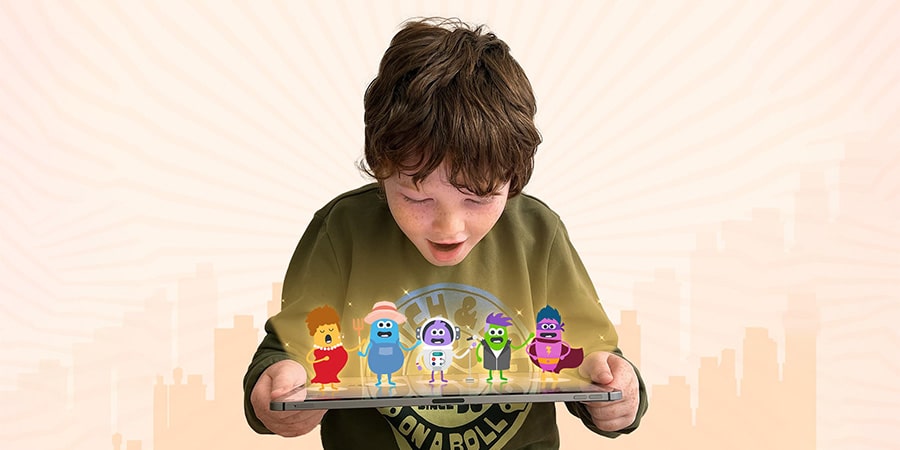
The team is currently running focus groups (Cartoon character on the right is named George who is the face of the kids focus groups) and interviews with children 5-18 years old with CP and their caregivers to better understand how children would like to learn about pain, what they want to know about, and any accessibility requirements when doing so. They are still recruiting for this project and would love to hear from as many children with CP as possible.
You can read more about the project or express interest in getting involved by scanning the QR code or clicking here. You can also find out more about the project here.

Meet George – George helps bring all the topics talked about in the CP Pain-Ed focus groups to life!
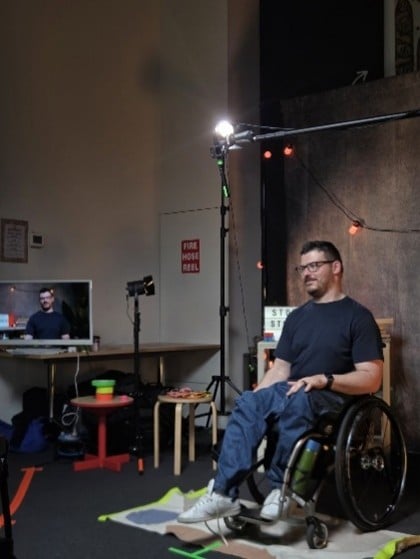
The CP-Pain Ed team are also running co-designed workshops as part of the project, with the first one held recently in September. Working closely with health education specialists, Matterworks, participants spent a hands-on day with the team, using creative storytelling and expression to share their knowledge about what the pain education resource should include and the language we should use. The day also included a visit from comedian Oliver Hunter (image to the left) who has cerebral palsy. The CP-Pain Ed team can’t wait to share the resource with everyone when it is ready!
Authors: Colleen Peyton, David Aaby, Vanessa M Barbosa, Lynn Boswell, Olena Chorna, Sabrina Del Secco, Ginerva Costagli, Cathryn Crowle, Andrea Guzzetta, Christine Janssen, Amanda Kwong, Joy Olsen, Cathy Morgan, Lucia Rocchitelli, Theresa Sukal-Moulton, Monica Toohey, Alicia Spittle
This study looked at the best age to use the General Movement Assessment (GMA), a simple screening tool that helps identify babies at risk of cerebral palsy (CP). Researchers analysed more than 2,000 videos of infants and found that typical “fidgety” movements were most often seen between 14 and 16 weeks corrected age. About one in ten babies showed these movements later than expected, meaning an earlier assessment alone could incorrectly suggest a problem. The findings suggest that the most reliable time for assessment is around 14 to 16 weeks corrected age, and that a repeat assessment may be helpful when results are unclear. Find out more here.

Authors: Simon P Paget, Sarah McIntyre, Jenny Lewis, Shekeeb Mohammad, Yana Wilson, Shona Goldsmith, Kirsty Stewart
Hereditary spastic paraplegia (HSP) is a rare group of genetic conditions that cause progressive stiffness and weakness in the legs. In pure HSP, movement difficulties are the main feature. In complex HSP, children also have other neurological, developmental, or health challenges. This study reviewed the care of 31 children with HSP who attended a specialist children’s hospital in Sydney. The children had a wide range of genetic causes and included both pure and complex forms of HSP. Researchers looked at the commonly used treatments for muscle stiffness, including botulinum toxin injections, oral baclofen medication, and orthopaedic surgery. Many children stopped botulinum toxin or baclofen because the treatments were not effective enough or caused side effects. Nearly half of the children had orthopaedic surgery. The findings suggest that current medical rehabilitation treatments may offer limited benefit for some children with HSP. They highlight the need for research into more effective, personalised treatments, which are tailored to different genetic forms of the condition. Find out more here.

Research studies and clinical trials are a vital way to identify breakthroughs and advancements in the treatment and prevention of cerebral palsy.