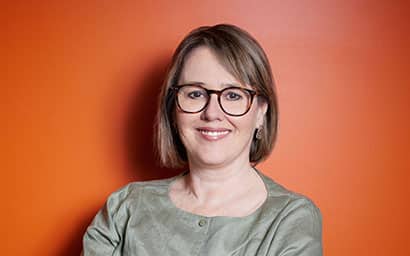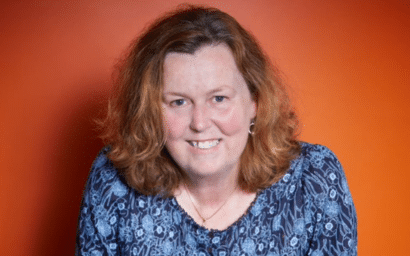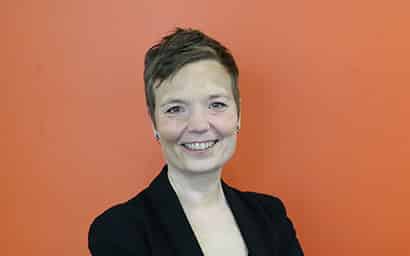
Professor Nadia Badawi AM is a neonatologist and a leading authority on cerebral palsy (CP) and newborn encephalopathy. In 2009, she was appointed Australia’s first Chair of Cerebral Palsy to lead and oversee Cerebral Palsy Alliance’s ambitious research program aimed at:
In this role, she leads a team of > 45 researchers at the Cerebral Palsy Alliance Research Institute. The Institutes work focuses on strategies to prevent CP, finding the best treatments and assistive technologies, as well as search for a cure. Collaboration with health professionals, researchers and policymakers has helped drive a 40% reduction in the rate of cerebral palsy in Australia – from 1 in 400 to 1 in 700 live births – one of the lowest published rates worldwide. This decline has also been accompanied by reduced severity, with fewer children experiencing epilepsy and more children able to walk.
Professor Badawi is a founding member of both the NSW/ACT CP Register and the Australian CP Register, the largest nationwide register and a powerful resource for research and service planning. She has also supported the establishment of CP registers in low‑ and middle‑income countries including Bangladesh and Vietnam, and contributed to the development of the International CP Genomics Consortium and the ANZ CP Strategy. She serves as a member on the steering group of the Global Low- and Middle-Income CP Register and the Scientific Advisory Board of the Cerebral Palsy Alliance Research Foundation. Professor Badawi has co‑chaired ten International Cerebral Palsy Prevention and Cure Summits.
Her research in newborn intensive care focuses on increasing the survival of infants and improving long‑term neurodevelopmental outcomes. She works closely with doctors, nurses, allied health professionals and families to enhance the experience of babies and parents in hospital. A recognised leader in neurodevelopmental follow‑up for high‑risk infants, she has helped implement change in developmental follow‑up procedures for all children undergoing surgery.
Professor Badawi is Medical Director and Co‑Head of the Grace Centre for Newborn Intensive Care, which provides training and mentoring to health professionals internationally. The Grace Centre is also the Australasian Newborn Individualised Developmental Care and Assessment Program (NIDCAP) Training Centre.
Her lifetime publications and citations place her among the top 1% of neonatologists globally, and she is the third most published CP researcher worldwide. She has served as Chief Investigator on more than 20 National Health and Medical Research Council project grants and three Cerebral Palsy Centres of Research Excellence. She has delivered over 150 national and international keynote presentations and more than 400 international conference presentations, securing more than $50 million in research funding and over $20 million in philanthropic grants.
In 2014, Professor Badawi was awarded an AM in the Queen’s Birthday Honours for significant service to paediatrics, neonatal intensive care, and research into cerebral palsy. She was a finalist for NSW Australian of the Year in 2026 and a finalist for the Premier’s Award for Public Service in 2025. She was also named one of the Australian Financial Review and Westpac “100 Australian Women of Influence” (global category) for her leadership in the search for the prevention and cure of CP and her commitment to improving educational opportunities for disadvantaged children in developing countries.
Professor Badawi and her team received the NSW Health Research Award for Research in 2023 and the Vice‑Chancellor’s Award for Research Excellence in 2024.
Through her leadership, advocacy and scientific contribution, Professor Badawi continues to improve the lives of children with CP and their families globally.
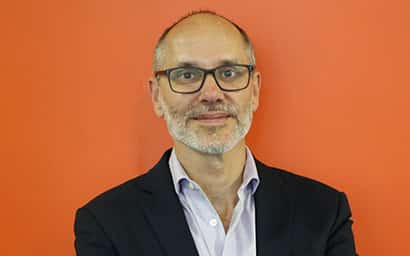
Ainsworth Chair of Technology and Innovation, The University of Sydney
Professor Alistair McEwan is the Ainsworth Chair of Technology and Innovation at Cerebral Palsy Alliance and University of Sydney, Faculty of Engineering and Information Technologies.
He is the Theme Leader for Biomedical Devices and Instrumentation and helps lead the Australian Research Council Training Centre for Innovative Bioengineering. He was appointed as CPA’s first Chair of Technology and Innovation in 2017 to harness advancing technology and innovation to accelerate the search for new and improved treatments and interventions for childhood disabilities.
Professor McEwan is an acknowledged leader in bioelectronics for solving health issues; in 2011 he was awarded a Microsoft Future Fellowship, the first Australian to be recognised with this award, for his work developing electronic devices to diagnose heart attack and stroke early. With teams in engineering and health, Professor McEwan is developing cognitive assessments for people with CP and investigating improved methods of mobility and communication using bionics, robotics and artificial intelligence to help people with cerebral palsy stay better connected to their communities.
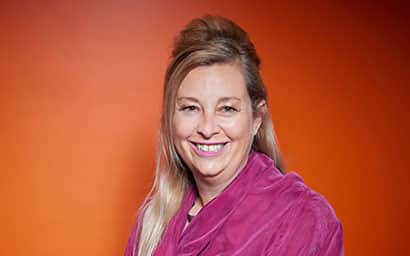
Chair of Allied Health, Head of Research Translation, The University of Sydney
Professor Iona Novak is the Cerebral Palsy Alliance Chair of Allied Health, The University of Sydney, Australia. Iona is a Fulbright Scholar establishing “Xcellerate” – an American-Australian Cerebral Palsy Stem Cell Research Consortium that pools collective efforts to find a cure and invited Chair of the International Clinical Guidelines for Cerebral Palsy.
Professor Novak is the top published occupational therapist in Australia, winner of the Elsass Foundation Research Award in 2021 and Editor for Evidence to Practice for Physical and Occupational Therapy in Paediatrics journal. According to the objective medical expert ranking index, Expertscape, Professor Novak is recognised as the second highest-ranked cerebral palsy expert globally.
Driven by an internal belief that research and healthcare have the potential to change lives, Professor Novak has pursued projects and roles with the greatest possible impact on children and families. She is internationally recognised as an expert in rehabilitation and neuroplasticity for children with CP and her work has led to changes in clinical practice in 24 countries, including co-founding the Australian Cerebral Palsy Register, and developing clinical practice guidelines to diagnose CP early, define best practice early intervention and interventions to improve independence for people with CP.
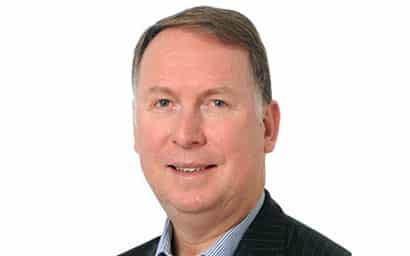
Chair in Neonatal Paediatrics, Director of CP Research, Victoria
CPA’s Chair of Research VIC was established in 2020 to bring together the brightest minds and key stakeholders across Victoria in CP research to accelerate building a research roadmap, providing direction for new discoveries globally.
Professor Rod Hunt, an accomplished researcher and neonatologist who has dedicated his working life to delivering the best care to some of Australia’s tiniest and most vulnerable babies was appointed to the position. Professor Hunt promotes CP research through collaboration with an outstanding multidisciplinary research team and program currently affiliated with seven major institutions in Victoria. Professor Hunt’s priorities include: