Speech is among the most complex skills that children learn. Even producing a single sound requires a child to think about what they want to say, coordinate precise movements of their lips, tongue, and jaw, control their breathing, use their voice, and monitor whether the sound matches what they intended to produce. When speaking in sentences, this process happens repeatedly and rapidly within seconds.
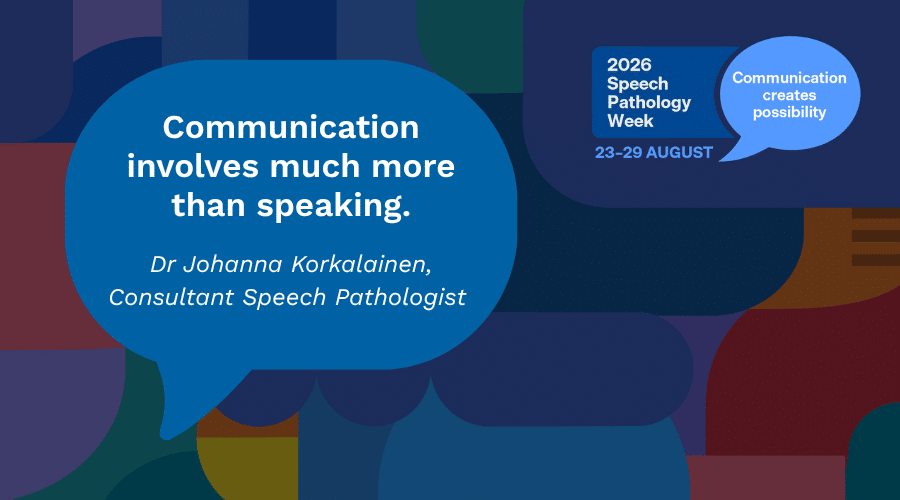
Communication involves much more than speaking. It also requires other people to listen, understand, and respond. Successful communication depends not only on a child’s ability to express their thoughts and needs, but also on whether the people around them can understand what they are trying to communicate.
Speech is among the most complex skills that children learn. Even producing a single sound requires a child to think about what they want to say, coordinate precise movements of their lips, tongue, and jaw, control their breathing, use their voice, and monitor whether the sound matches what they intended to produce. When speaking in sentences, this process happens repeatedly and rapidly within seconds.
Communication involves much more than speaking. It also requires other people to listen, understand, and respond. Successful communication depends not only on a child’s ability to express their thoughts and needs, but also on whether the people around them can understand what they are trying to communicate.
Because speech and communication development are so complex, it is important for parents and speech pathologists to work together with both short-term and long-term goals in mind.
Therapy goals often focus on the next few months, such as learning to say new words, improving speech clarity, or increasing vocabulary. While these goals are important, it can also be helpful to consider a child’s future communication needs. Questions parents may wish to discuss with their speech pathologist include:
Taking a long-term perspective helps ensure that today’s therapy decisions contribute to meaningful communication outcomes in the future.
Most children with cerebral palsy (CP) learn to speak, although speech and language milestones may develop more slowly than in their peers. Early support is important because it provides children with additional opportunities to develop the speech, language, and communication skills they need for daily life.
Starting intervention as early as possible can help build strong foundations for communication and support a child’s participation at home, in education settings, and within their community.
For most children with CP, therapy focuses primarily on developing spoken language and speech. However, for some, particularly those with significant speech or speech motor difficulties, speech development may occur alongside the use of Augmentative and Alternative Communication (AAC).
A common concern among parents is whether AAC will replace speech. Research and clinical experience show that AAC is not used to replace speech. Instead, it gives children a reliable way to communicate while their speech skills are developing and provides opportunities for successful communication in everyday situations.
It is important to plan what therapy should focus on speech development, AAC use or simultaneously on both.
Every child’s communication journey is unique. By working together, families and speech pathologists can make informed decisions that support both current communication needs and future participation. Whether a child communicates through speech, AAC, or a combination of both, the goal remains the same: helping them speak and communicate better and more confidently, connect with others, and participate fully in the world around them.