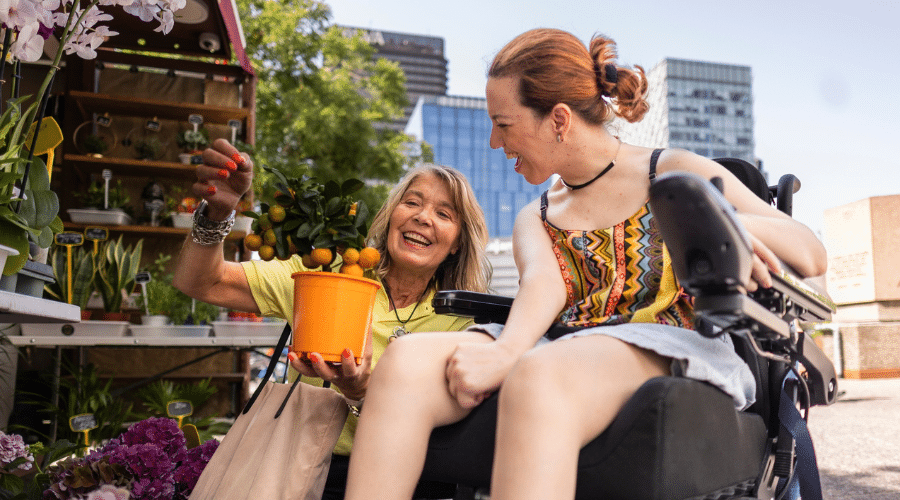
Connection is one of the most important parts of being human. Everyone deserves the opportunity to connect with the people around them, and as a speech pathologist, helping to make those connections possible is one of the most rewarding parts of my job.
What I love is that connection can look completely different for every person.
Recently, I watched one of my clients use an eye gaze device to put together a three-word sentence: “I love Mum.”
It was something we had been working towards and seeing her independently communicate something so meaningful was an incredibly special moment.
Another client I work with uses a switch to communicate. We were at her day program having a dance party with her support workers. Every time the music stopped, she used her switch to ask for “more” and the dancing started again.
It was fun and joyful, but it was also communication doing exactly what it should do: giving someone the opportunity to join in and connect with the people around them.
And connection starts long before words.
With some of the babies I work with, it might be a game of peek-a-boo with Mum or Dad. A smile, a facial expression or a back-and-forth interaction can be the beginning of learning that communication is something we share with another person.
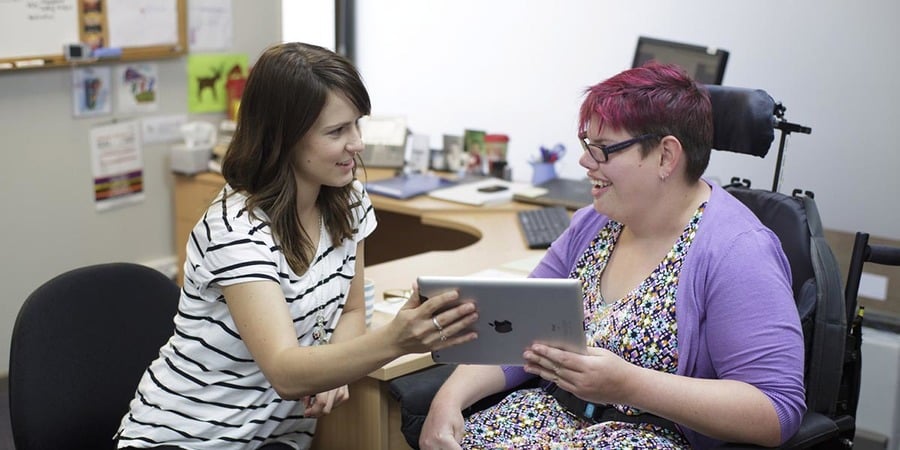
That’s what I find so exciting about speech pathology. Across our lifetime, there are so many ways we can communicate and connect – through speech, facial expressions and gestures, eye gaze, switches, AAC and more.
My own connection with speech pathology started when I was very young.
I was born with a cleft palate, so speech pathologists were part of my life from a young age. When you’re a child with medical needs, it can sometimes feel like you’re constantly being poked and prodded. Between the endless appointments, tests, and scans, it often felt like I was always being examined.
Seeing my speech pathologist felt different. We would play and chat, and I loved my interactions with her. I remember thinking from a very young age that I wanted to become a speech pathologist too.
Now that I am one, there are so many things I love about the job.
I love celebrating with clients and their families when someone achieves a goal or we see a new skill in action. There’s also a lot of laughter and silliness in speech pathology sessions, being silly can be one of the best ways to learn and connect.
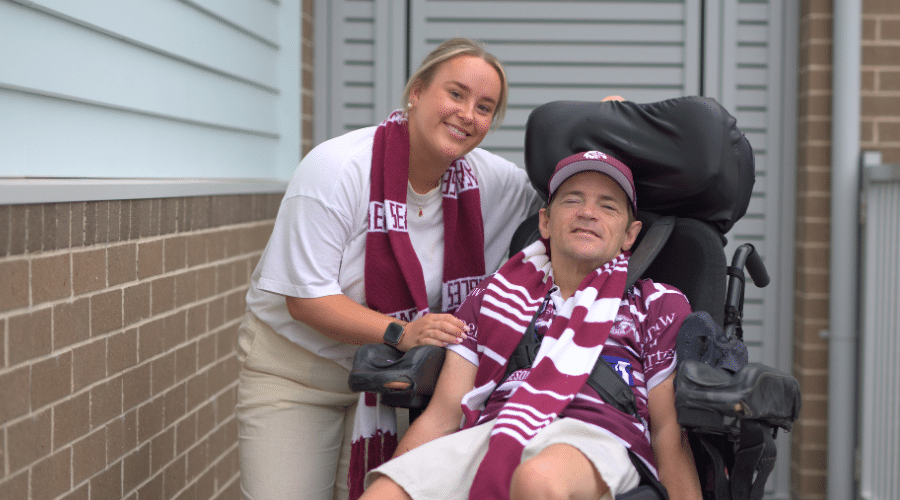
And I love working alongside families, teachers, support workers, carers and other therapists. When everyone comes together around a shared goal, it can create more opportunities for that person to communicate and participate.
Because ultimately, communication creates opportunities for friendship, relationships, participation and independence.
These moments can look very different – a smile during peek-a-boo, asking for the music to play again, or using eye gaze to tell Mum “I love you” for the very first time.
Each one is a meaningful moment of connection, opening up a world of possibilities.
That’s what the possibility to connect means to me.