That’s the question being explored by researchers around the world as interest in exoskeleton technology continues to grow.
In a recent article for The Conversation, CPA Research Institute researcher Dr Nicola Postol examined the promise, progress and remaining challenges of exoskeletons for people with cerebral palsy.
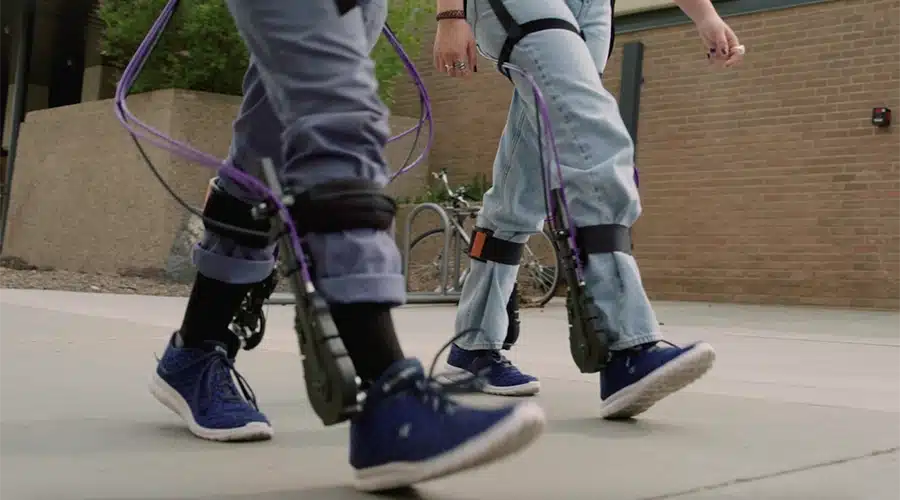
An exoskeleton is a wearable robotic device designed to assist movement. They can support walking by helping move the hips, knees or ankles, even for people with the most significant support needs.
For people with cerebral palsy, exoskeletons have the potential to provide additional support during therapy and everyday activities, helping users practise movement in ways that may not otherwise be possible.
According to Dr Postol, exoskeleton technology has advanced rapidly over the past decade, with studies showing promising improvements in walking speed, endurance, balance and mobility for some users.
However, the evidence is still emerging.
Researchers are continuing to investigate important questions including:
“While exoskeletons are no longer science fiction, there is still much to learn about how they can best support people with cerebral palsy,” said Dr Postol.
As awareness of the technology grows, some families are travelling interstate and spending significant amounts of money to access exoskeleton programs. While the early results are encouraging, researchers caution that many questions remain unanswered and that access decisions should be guided by evidence and individual goals.
“We understand why families are excited about the potential of these technologies,” said Dr Postol. “But it’s important that people have access to balanced, evidence-based information before making major financial commitments.”
At CPA, researchers believe technology should always be developed with the people who will use it.
Through its Technology Program, CPA works alongside people with lived experience, clinicians, engineers and researchers to ensure new technologies are practical, accessible and address real-world challenges.
This includes exploring how innovations such as robotics, artificial intelligence, communication technologies and assistive devices can improve quality of life across the lifespan.
Exoskeletons represent an exciting future for disability technology, but researchers caution against viewing them as a one-size-fits-all solution.
Instead, they may become one tool among many that help support movement, participation and independence.
As research continues, CPA remains committed to ensuring people with cerebral palsy have access to evidence-based information about emerging technologies and opportunities to help shape future innovation.
Dr Nicola Postol also discussed exoskeleton technology and its potential implications for people with cerebral palsy on 2GB Radio, helping bring this important conversation to a broader audience.
Listen to the interview and read the full article below.