Umbilical cord blood treatment is an emerging therapy for CP with now more than 20 years of research supporting the safety and potential benefits of this approach. Despite the expanding evidence base, including the 2025 cord blood infusion of a child with CP in Australia, access to cord blood treatment is very limited globally. Duke University in the US are world-leaders in cord blood treatment for CP, having conducted several clinical trials and offering compassionate access to this treatment via their Expanded Access Program since 2017.
An Expanded Access Program is a US compassionate treatment program that can enable access to unapproved therapies (like cord blood treatment for CP) with authorisation from the US Food & Drug Administration (FDA). A requirement of authorisation is ongoing research to advance the evidence base towards treatment approval.
Altogether, Duke have treated more than 1,000 children with brain injuries (including CP) at their centre, providing a unique opportunity to learn firsthand what helps and what hinders an authorised cord blood research program, with the aim of taking learnings to support global implementation of cord blood treatment for CP in the future.
As part of her Fulbright Fellowship, Madison spent six months at Duke University in the US across 2024/2025 to better understand how to bring cell therapies like cord blood to Australian’s who might benefit. During this time, she interviewed 16 professionals who were directly involved in delivering cord blood treatment at Duke or their collaborating site. The professionals involved with the program were asked about a variety of topics to help better understand their experience of being involved in the program and what helped support the program, or any barriers that were faced and needed to be overcome.
“This project beautifully captured all the unspoken expertise that I was witnessing each day in the clinic and research environment. Being able to sit down, one-on-one with experts in cord blood treatment for CP provided a unique experience for reflection.”
Madison Paton
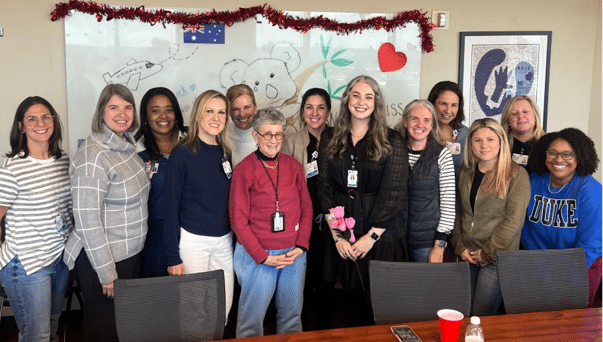
Image above: Madison during her Fulbright Fellowship with the team at Duke University.
Analysis of the interviews revealed 5 key themes:
1) Clinical leadership & collaboration, community priorities
2) Procedures, setting and cost
3) Safety and efficacy evidence, looking to the future
4) Trust and reputation through research & experience
5) Resourcing, infrastructure & commercial appeal
Figure showing the five key themes identified through qualitative analysis. Reproduced from Paton, et al., 2026 https://doi.org/10.1093/stcltm/szag074
Within these themes, several specific facilitators and barriers to implementing cord blood treatment for CP were highlighted, including:
| Key Facilitators | Main Barriers |
|---|---|
| Leadership across disciplines | Limited awareness among external clinicians |
| Multidisciplinary teams and dedicated resourcing | Uncertainty around treatment effectiveness |
| A strong research culture and safety profile | Funding and regulatory constraints |
The findings of this study highlighted several barriers that need to be overcome to establish a cord blood treatment program for CP at Duke University. Importantly however, many of these barriers are known to occur with other treatments, meaning that there are proven approaches that can be used to help introduce cord blood treatment for CP. This suggests that cord blood treatment programs could be implemented elsewhere, for example in Australia. However, the professionals interviewed cautioned that local factors would need to be considered. Future research should examine insights from stakeholders outside of Duke’s program to further understand how this might be possible, as well as continuing to gather the necessary evidence to support regulatory approval of cord blood treatment for CP.
You can read the full research paper here.

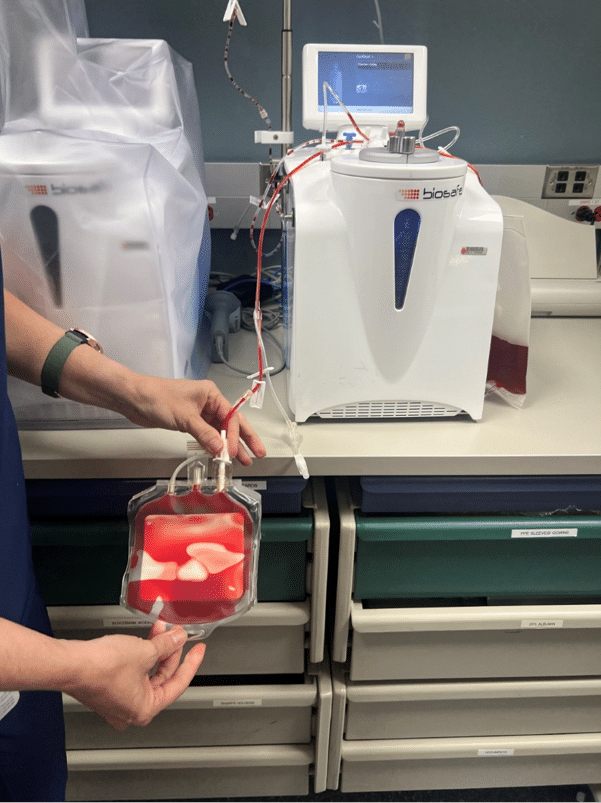
Images Left to Right: L) The Duke University campus R) Preparation of cord blood unit for treatment.