The $4.5 million Canadian research project, Developing a Modular Communication Assistant for Persons with Speech Impairment, led by Professor Claire Davies from Queen’s University, Canada has been funded through the NSERC Alliance Society Grant.
CPA Research Institute researcher Dr Petra Karlsson joins the project as an international partner, representing both Cerebral Palsy Alliance and the University of Sydney.
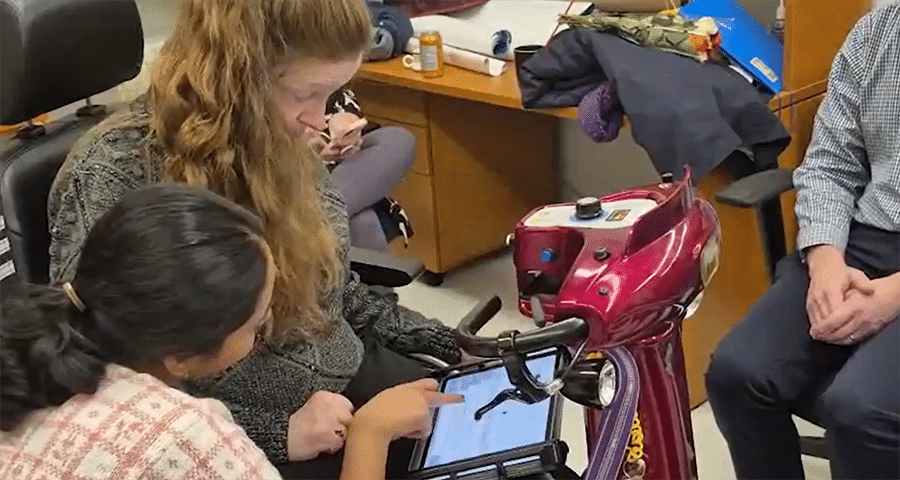
The project will bring together researchers, engineers, clinicians, employers and people with lived experience to co-design new communication technologies that make workplaces more accessible and inclusive.
The research will explore how communication shapes participation, employment and belonging.
Dr Karlsson explains, “Employment accessibility isn’t only about adjustments to the physical or digital workplace. It’s also about culture, how communication happens, how people are invited to participate, and whose perspectives are genuinely heard and valued.”
The project forms part of the Connected Minds Team Grant, When People Talk, Listen Completely, which aims to rethink how workplaces can better support people with speech impairments.
CPA’s involvement provides an opportunity to collaborate with some of the world’s leading researchers in communication technology and childhood disability whilst providing our researchers with direct access to cutting-edge international research and innovation.
The partnership will enable knowledge sharing between Australia and Canada, support future research collaborations, and create opportunities to host Canadian PhD students and researchers at the CPA Research Institute.
For many people living with cerebral palsy, communication is central to education, employment, relationships and independence and this project helps to ensure future communication technologies are designed alongside the people who will use them and address the real barriers they experience every day.