tDCS is a type of non-invasive brain stimulation – a group of methods that can change brain activity without surgery or implants. tDCS is an approved treatment for conditions such as depression, anxiety and chronic pain, but is still being investigated in research for people with CP. Previous studies testing tDCS for CP has shown that it is safe when administered under controlled conditions such as face-to-face in the clinic. Recent studies have also explored whether tDCS could improve motor function in CP when combined with other rehabilitation therapies, such as constraint induced movement therapy, but inconsistent results have meant continued research is required to fully understand its potential for benefit.
How is transcranial direct current stimulation (tDCS) used?
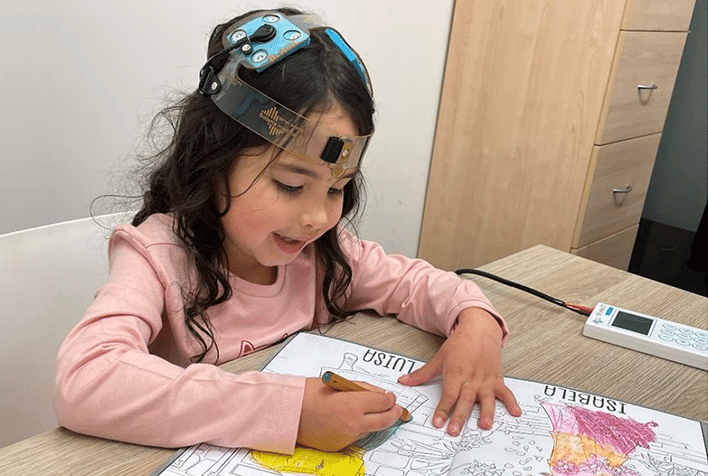
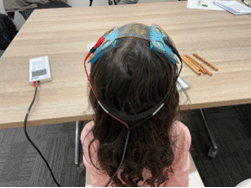
During tDCS, a low level of electrical current (in this trial 1.5 milliamps were used) is delivered through two electrodes placed onto the headgear.A sponge pad is clipped onto each electrode which helps the current transfer from the electrode to the scalp evenly. The electrodes are set in position, meaning that the stimulation targets a specific area of the brain and cannot be moved/adjusted. The electrodes connect to a small pre-programmable handheld device which controls when the stimulation starts and stops.
In this trial, to ensure participant safety, stimulation could only be activated using a unique code provided by the research team.
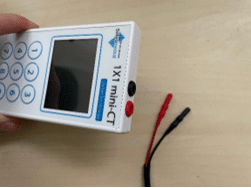
Left image: tDCS small pre-programmable device and cables
Right image: tDCS headgear worn on the head and connected to the device. Red and black electrodes connected to the headgear, as well as blue sponge pads clipped on to the headgear, can be seen.
tDCS has the potential to be used remotely (in the home), thereby increasing its accessibility as an add-on treatment to rehabilitation training for individuals with CP. This is important since in Australia, 30% of people with CP live in rural and remote communities, with reduced access to in-person speciality clinics and services. However, before larger programs and studies using tDCS in the home are rolled out, it is important to ensure that tDCS can be set up correctly and used safely in this setting.
What is a clinical trial?
A clinical trial is a research project that tests how new medical approaches such as medicines or medical devices work in people. They help researchers answer improtant questions such as “Is this safe?” or “Does this treatment improve health outcomes?”. Clinical trials help researchers collect information that enables regulatory agencies, such as the Therapeutics Goods Administration (TGA) in Australia to decide whether a treatment is safe and effective and should be approved and made available for more widespread use.
In collaboration with doctors and researchers at Monash Health and the University of Wisconsin-Madison, the CPA research team conducted a clinical trial that was designed to recruit up to ten participants with CP aged 8-17 years old from around Australia. The trial aimed to explore the safety, feasibility and tolerability of tDCS delivered in the participant’s home with real-time supervision and monitoring by the research team on a video call (using Zoom).
Between May 2024 and November 2025, nine children were enrolled in the trial. Involvement in the trial included the completion of five separate sessions – one Mock session, one Sham session and three Active sessions. Each session consisted of setting up the tDCS device and the participant wearing the headgear with (or without) stimulation for 20 minutes. Participants experienced no stimulation in the Mock session, briefly experienced the stimulation in the Sham session, and experienced the stimulation for the full 20-minute period in the Active sessions. In each session participants were asked how they were feeling before, during and after the stimulation, and both the caregiver and participant were asked about their experience of the session. See the figure below for more information.
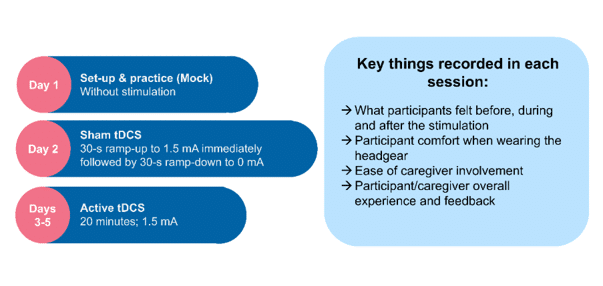
Figure Description – Outline of the steps involved in each session and what was recorded
Safety
There were no serious or unexpected side effects observed for any participant within the trial. As expected from previous research, tingling and itchiness on the scalp/head were felt most commonly during stimulation. Encouragingly, these sensations were short lived and stopped when the tDCS device was turned off.
Tolerability
The intensity the tDCS electrical current used in this trial (1.5 milliamps) was well tolerated. No participant needed to remove the headgear, stop the stimulation early, or reduce the current. Most sensations were reported by the child participants as being ‘mild’, with many reported as not being related to the stimulation (for example being tired from school or in pain from a toothache). Around half of the participants found the tDCS headgear comfortable, with the remainder finding it slightly uncomfortable or uncomfortable but tolerable.
Feasibility
Caregivers reported that the steps involved to set up the tDCS device were Easy or Very Easy. On average, it took caregivers around 13 minutes to set up the tDCS device, although caregivers got faster over time (most likely due to practise). Encouragingly, minimal adjustment to the tDCS device or headgear/electrodes was required to maintain stimulation during all sessions.
This trial showed for the first time that tDCS can be safely and feasibly delivered in the home for children with CP with remote supervision from the trial team. This is an important step forward towards improving accessibility to this type of CP treatment in Australia. Future research should continue to explore the efficacy of remotely supervised tDCS in larger studies, for example by testing more frequent use combined with rehabilitation or trialling it in specific groups of children with CP.
You can read the full research paper here.