Refer to CPA

Starting school is a big milestone for any child and their family. For children who need additional support with their communication, language or learning, preparing for that transition early can help set them up for a positive start.
As a speech pathologist, I work closely with children and families to develop the communication skills they need to learn and participate in education settings. But it’s not something we do in isolation.
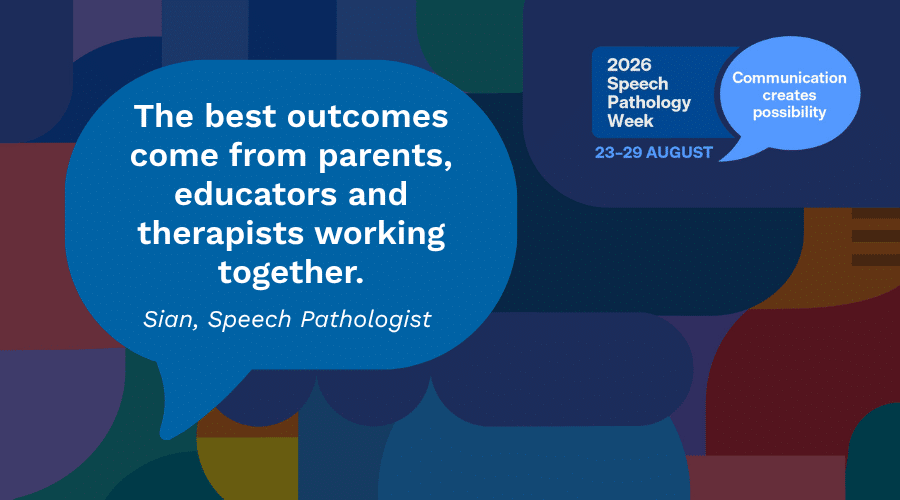
Some of the best outcomes I’ve seen have been when parents, educators and therapists work together, sharing what they know about the child and the strategies that help them communicate and learn.
Starting school is a big milestone for any child and their family. For children who need additional support with their communication, language or learning, preparing for that transition early can help set them up for a positive start.
As a speech pathologist, I work closely with children and families to develop the communication skills they need to learn and participate in education settings. But it’s not something we do in isolation.
Some of the best outcomes I’ve seen have been when parents, educators and therapists work together, sharing what they know about the child and the strategies that help them communicate and learn.
Here are three things families can consider as their child prepares to start school.
A successful transition to school doesn’t begin on the first day.
Before a child moves from preschool or daycare into school, it’s helpful to start conversations between the people who know and support them.
Parents bring an incredible amount of knowledge about what works at home. Preschool and daycare educators know the strategies and supports that help the child in their current learning environment. Speech pathologists and other therapists can also share information about the child’s communication and learning goals.
Bringing that knowledge together and sharing it with the new school can help ensure useful supports don’t get lost in the transition.
Where possible, have these conversations early. Talk about what’s currently working, where your child may need additional support and what might help them in their new classroom.
If your child will have an Individual Education Plan (IEP) or modified curriculum, involving the broader team in those discussions can also help everyone work towards shared goals.
Every child learns differently, so it’s important to think about the strategies that help your child understand information, communicate and participate.
For example, a child might find it difficult to follow a series of verbal instructions but respond really well to visual information. Using pictures to show the steps involved in an activity or routine can make it easier for them to understand what’s expected or to complete the task.
Speech pathologists can work with families and educators to identify and develop systems and strategies like these and consider how they can be incorporated into the classroom.
We might also support areas such as understanding and using language, phonological awareness and literacy, speech sounds, social communication or provide training and education on how to use a child’s communication device or other communication strategies like keyword sign so a child can more fully participate in the classroom or playground.
What’s important is that the skills we’re working on don’t exist only within a therapy session. We want to see them translate into the child’s everyday environment, helping them participate and learn in ways that are meaningful to them.
School orientation programs are a fantastic opportunity for children to visit their new environment and begin learning what to expect.
For some children, it can be helpful to build on that experience by creating a personalised social story they can look at again and again.
You might take photos of their new classroom, teacher, where they’ll put their bag, where they’ll get off the bus or other important parts of their school day. These can be put together with simple descriptions of what their new routine might look like.
There’s often quite a long break between school orientation and the first day of school. Having something familiar to look through at home can help a child remember what they’ve seen and know a little more about where they’re going and what will happen when they get there.
Every school and every child’s routine will be different, so the social story should be personal to them.
Preparing children for future learning can start well before they’re ready for school.
I’m currently working with a young child who is learning to use a communication device, uses some keyword signs and is starting to use more words and vocalisations.
During our sessions, she’s learning to use words such as “go”, “finished” and “more”. She might use her device to ask for more Play-Doh or bubbles, or tell me when to send a toy car racing down a track.
One of the most rewarding things is seeing her face light up when she communicates something either on her device, by sign or saying and realises the power of being listened to and having someone respond.
She’s not at daycare yet, but we’re building those communication skills now with the hope of creating a strong foundation for when she transitions into daycare next year. When that happens, part of my role will be working alongside her educators so they understand how to support her communication there too.
That’s what Possibility to learn means to me. It’s not just about what happens in a speech pathology session or a classroom. It’s about families, educators and therapists working together to give each child the tools and support they need to communicate, participate and work towards their goals.
When we share what we know and build on what’s already working, we can help create more opportunities for children to learn – wherever that learning takes place.