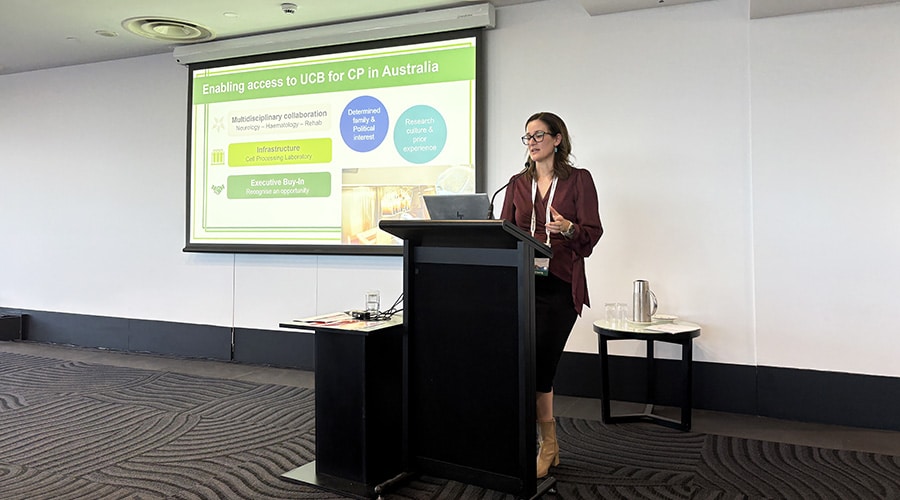
At the 2026 Oceania Academy Conference in Hobart, researchers from Cerebral Palsy Alliance (CPA) hosted an instructional workshop titled “Cord blood treatment for cerebral palsy: Evidence you need to know to support families with implementation”.
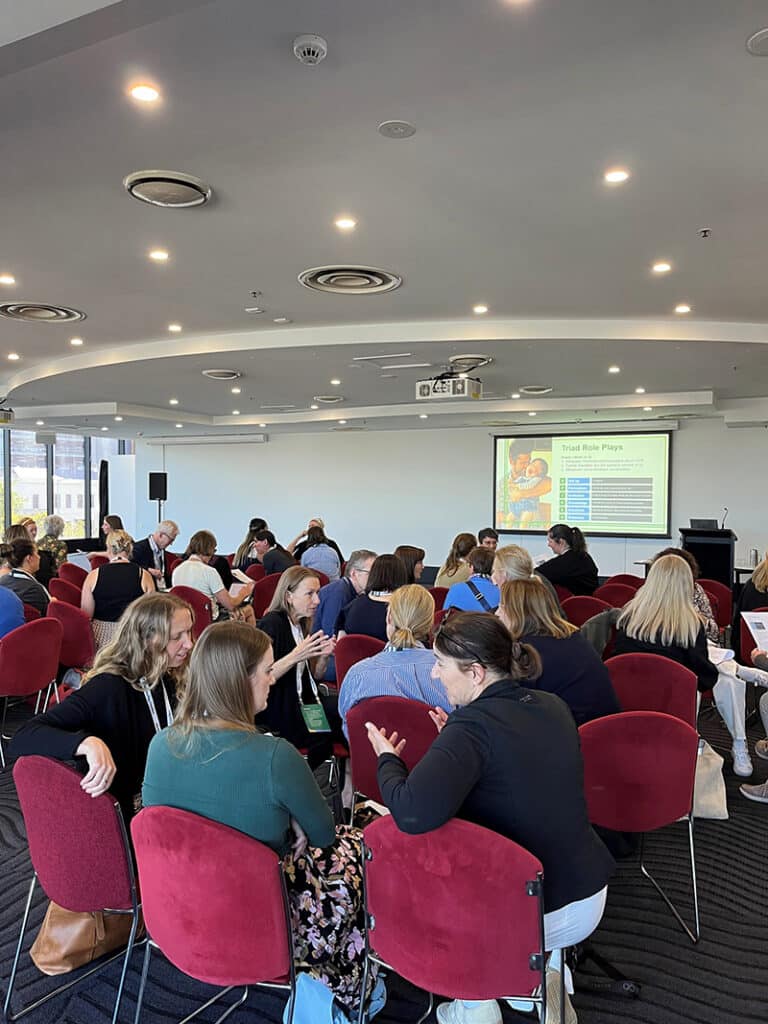
The session brought together over 50 clinicians and researchers to explore the latest evidence and what it means for practice.
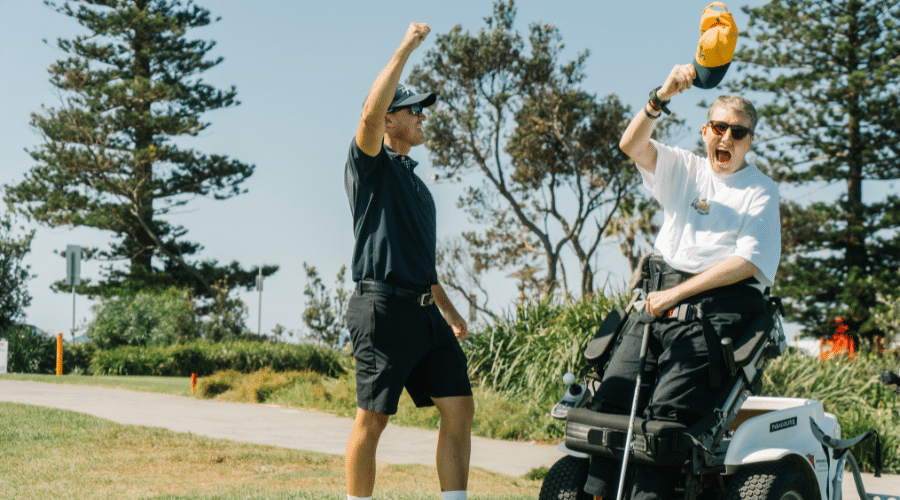
Led by Regeneration Theme Lead Dr Megan Finch-Edmondson, the session was co-presented by Professor Iona Novak and Michelle and Fiona – parents of Zara, the first child in Australia to be treated compassionately with cord blood. This combination of scientific evidence and lived experience grounded the discussion in both scientific and clinical insights and real-world impact, highlighting what access can mean for families.
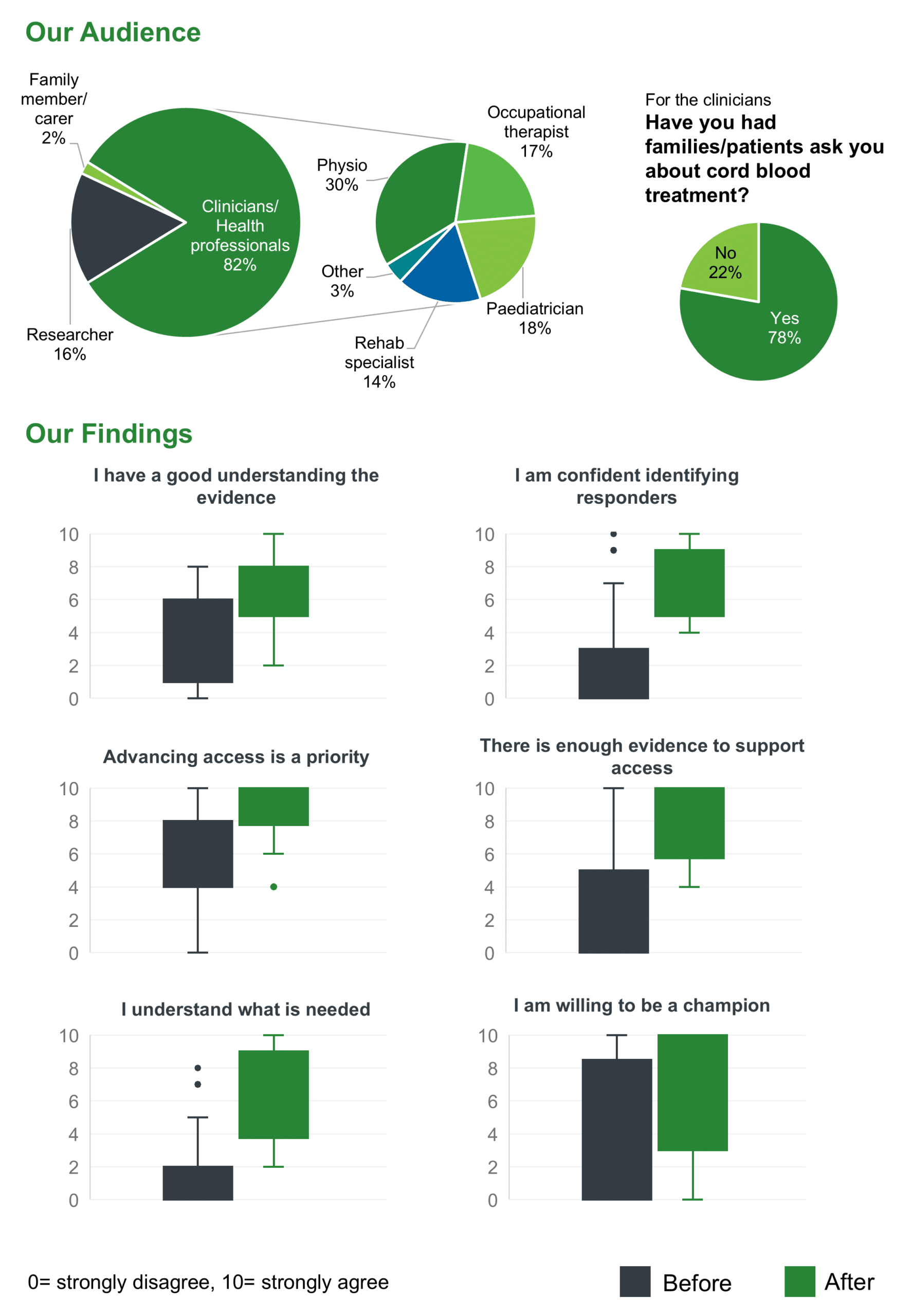
Attendees were primarily physiotherapists, occupational therapists, paediatricians and rehabilitation specialists, reflecting a strong and growing demand for information to assist health professionals in counselling families about this topic.
Notably, nearly 80% of the clinicians in attendance had previously been asked by families about cord blood treatment for cerebral palsy.
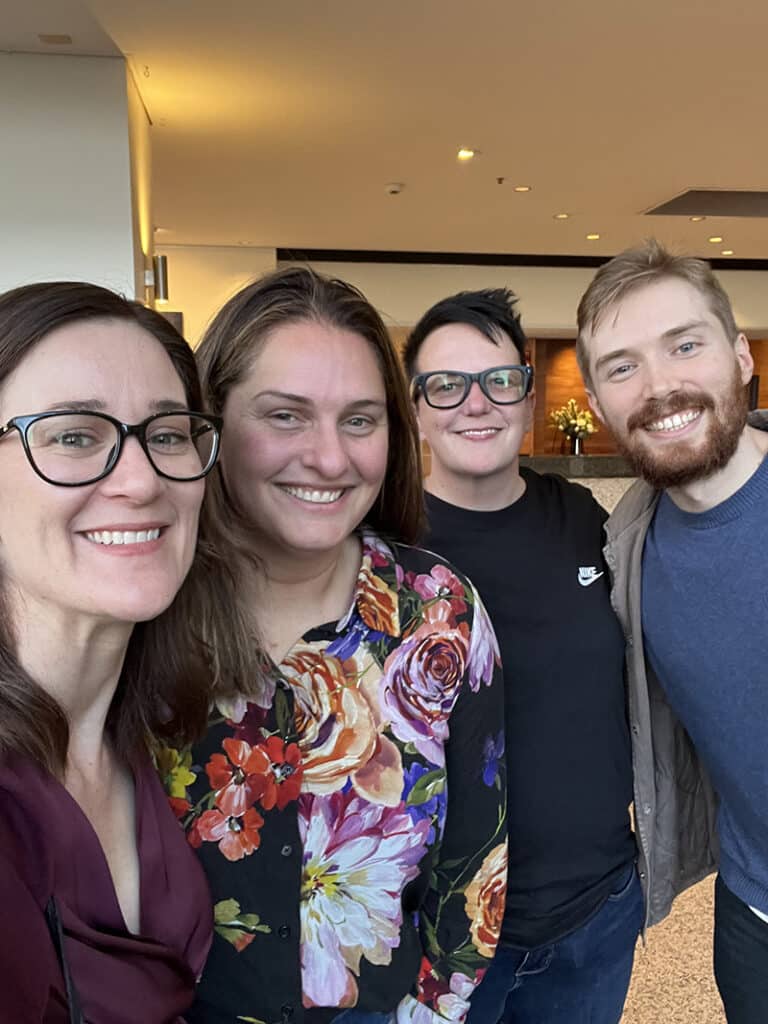
While cord blood therapy is not yet approved as a standard treatment for cerebral palsy in Australia, CPA researchers are actively progressing clinical trials and supporting families to access treatment through the Special Access Scheme where appropriate. Conference workshops like this play a critical role in sharing new research information and helping to inform clinical practice. As trusted advisors, clinicians are central to how new therapies are understood, discussed, and ultimately accessed by families.
To better understand how clinician knowledge and attitudes are shifting, CPA researchers conducted surveys before and after the 90-minute workshop. Overall, the results showed that attendees:
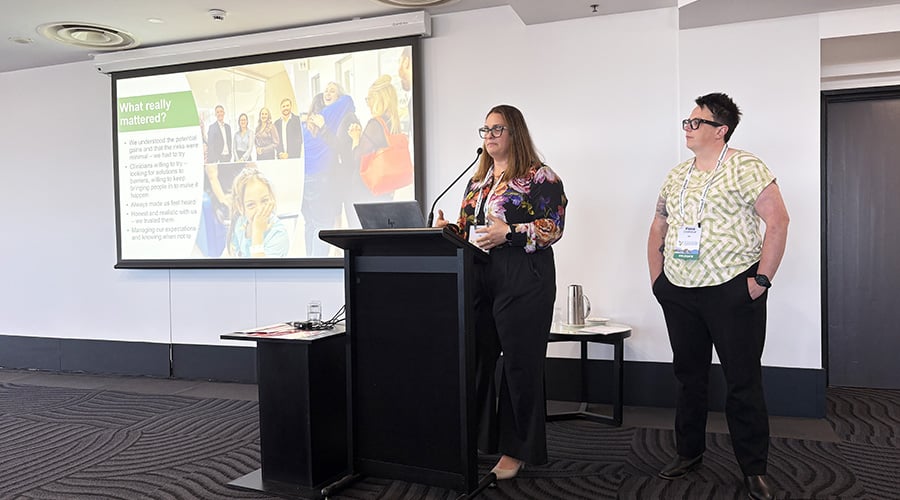
The workshop builds on CPA’s leadership in this emerging field, including supporting the first child in Australia to receive cord blood treatment for cerebral palsy on compassionate grounds – a milestone that has helped stimulate both clinical and community interest in this therapy.
These results highlight the importance of continuing to share information with healthcare professionals, so that we can help to inspire clinical champions to progress research and advance access to this new therapy.