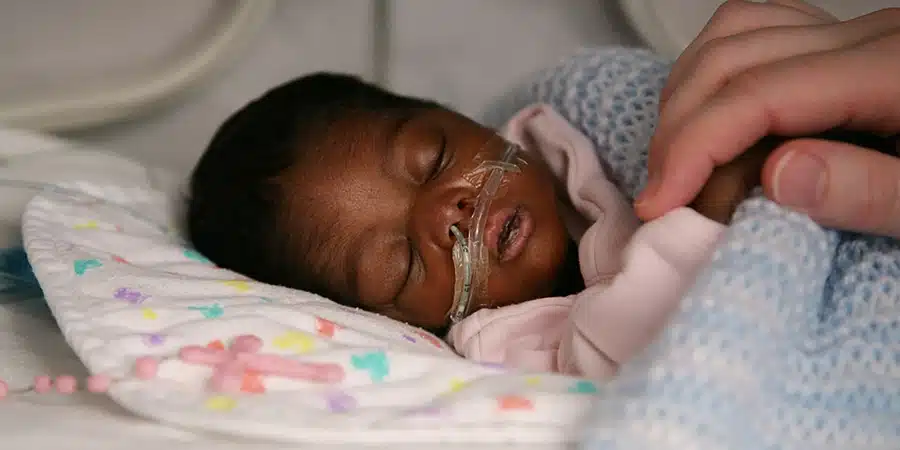
Published in JAMA Network Open, the research looked at whether carefully monitoring oxygen levels in a baby’s brain during the first few days of life could help reduce the risk of brain injury. Brain injury in very premature babies is one of the main causes of lifelong conditions such as cerebral palsy.
Babies born before 29 weeks of pregnancy are especially vulnerable. In the first days after birth, their bodies are still learning how to regulate oxygen and blood flow. If the brain receives too little oxygen, or sometimes too much, it can increase the risk of injury.
In this study, the doctors used a special, non-invasive monitor placed on a baby’s head. The device – a near-infrared spectroscopy (NIRS) – is a technology that continuously measures oxygen levels in brain tissue. It uses light to measure how much oxygen is reaching the brain in real time.
Some babies received standard care, while others were treated with the help of this brain oxygen monitor. When oxygen levels moved outside a defined safe range, medical teams followed a clear plan to adjust treatment quickly and bring levels back to normal.
The results were encouraging. Babies whose care was guided by brain oxygen monitoring spent much less time outside the healthy oxygen range compared with babies receiving standard care.
Just as importantly, the monitoring was shown to be feasible and safe with no serious complications linked to the approach.
While the trial was not designed to measure long-term neurodevelopmental outcomes, improving stability of brain oxygenation is considered a critical step in reducing the risk of brain injury.
For families of very premature babies, this research represents a hopeful step forward and, with better monitoring and faster responses, doctors may be able to reduce some of the risks faced by these tiny newborns.
Larger studies are still needed to confirm whether this approach leads to better long-term outcomes and lower rates of brain injury, including reducing the risk of cerebral palsy. But the findings add to growing global efforts focused not only on treatment, but on prevention. Protecting the brain in the first days of life could make a lifelong difference.
Cerebral Palsy Alliance is committed to supporting research in Australia and around the world that advances prevention, improves early detection, and changes the future for children at risk of CP.