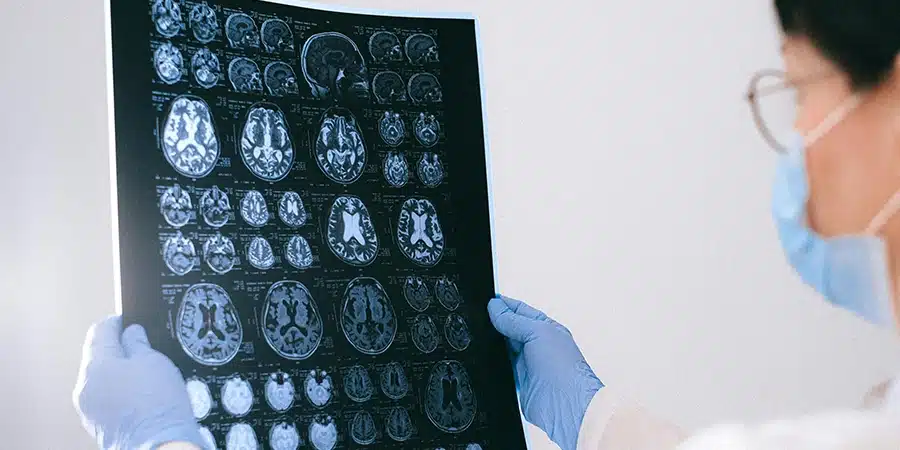
Published in the journal eBioMedicine, the research found that patterns seen in magnetic resonance imaging (MRI) scans can help predict the likelihood of identifying an underlying genetic cause in children with cerebral palsy. The research findings suggest that when MRI scans show no clear sign of brain injury acquired before or around birth, there is a much higher chance of finding a genetic explanation.
Dr Jesia Berry, supported by a CPA Emerging Researcher Grant, said the results reveal the interaction between genetic and environmental factors in early brain development.
“Patterns without clear injury were more likely to be linked to genetic causes,” said Dr Berry.
Dr Clare van Eyk from the University of Adelaide’s Robinson Research Institute noted that an MRI scan on its own can’t tell doctors whether cerebral palsy is caused by genetics, but it can give helpful clues. Those clues can help doctors decide when it’s worth doing genetic testing, which can lead to clearer answers for families and ultimately, more accurate diagnoses and more tailored care for children living with CP.
“We found that genetic diagnoses were identified in 24 per cent of children overall. Among those without signs of injury on MRI, 39 to 48 per cent had an underlying genetic cause, which is two to three times higher than for those with an injury pattern. Yet, genetic causes were seen across all MRI patterns, including in 17 per cent of children with a brain injury pattern,” explained Dr van Eyk.
Professor Jozef Gecz, Professor of Human Genetics, said, “Cerebral palsy isn’t a single condition with a single cause. The key message from this study is that an MRI can provide important clues and guide care, but no MRI pattern rules out a genetic cause.”
This study demonstrates how CPA’s investment in emerging researchers is helping to drive innovation and scientific understanding of cerebral palsy – potentially improving future diagnostic pathways and improve outcomes for children and families.