
Technology

Pioneering technology innovations to support inclusion for people with disabilities

Technology is an enabler that has revolutionised communications and mobility options for people with cerebral palsy and other physical disabilities.

We are harnessing the power of emerging technologies through research and translation to enhance mobility, communication, and cognitive function for people with cerebral palsy, empowering them to thrive across every stage of life.

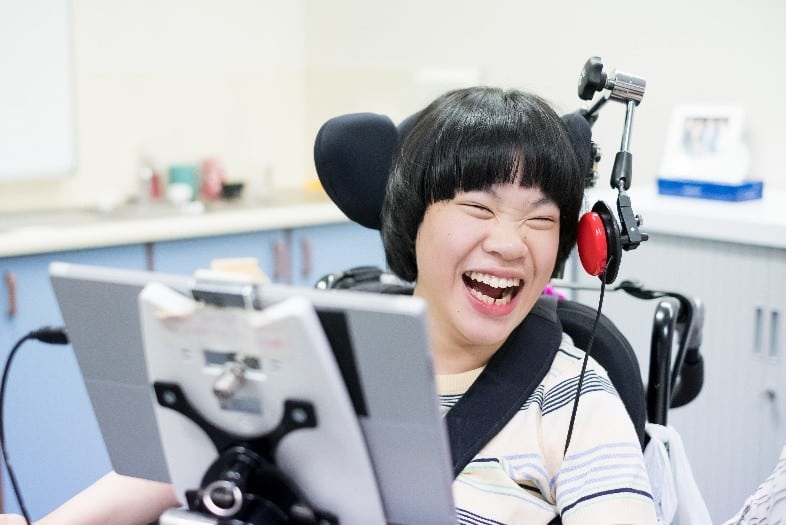
From robotics and exoskeletons to eye-gaze technology and brain-computer interfaces, many things that seemed impossible a generation ago are now a reality and already making a huge difference for people with cerebral palsy and their families. 

Our team of researchers, therapists and engineers are advancing hugely exciting projects to further unlock the future of assistive technology to make positive change by breaking down barriers to communicate, move and participate. 

Assistive technology holds the promise of an exciting future for people with cerebral palsy.  

Impact

2025

My Voice Library expands internationally with the launch of My Voice Library Italia   
2024
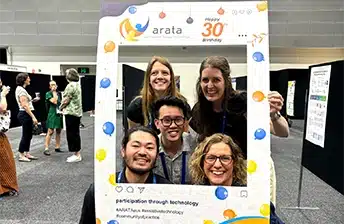
Some of hte CPA Technology Research team posing for a photo

Technology team expanded to have multidisciplinary representation with the appointment of Nicola Postol (physiotherapist) and Annemarie Murphy (speech therapist) joining the Team  
2023
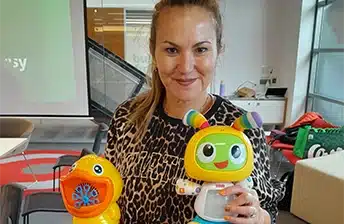
A CPA team member holding two tech toys

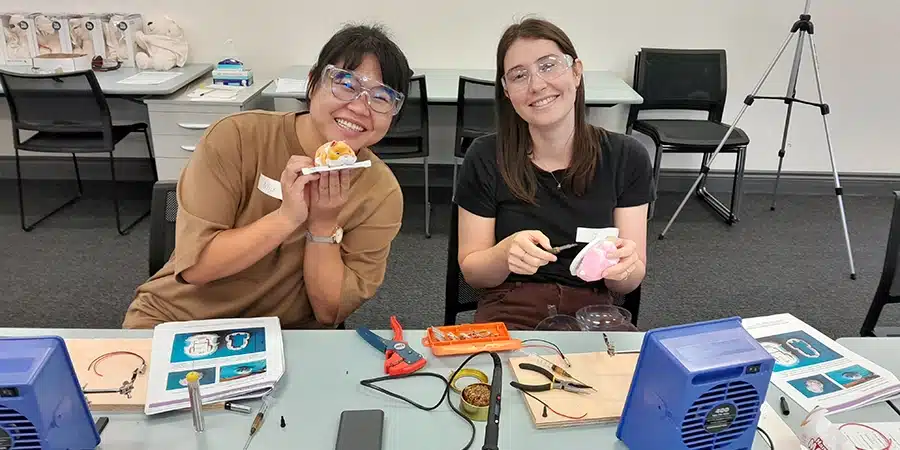
Scaled up the TechToys Honours Program collaboration with The University of Sydney Biomedical Engineering Students, staff and families attending Cerebral Palsy Alliance therapy services.  
2022

Technology theme identified priorities of Mobility, Cognition and Communication 
2021
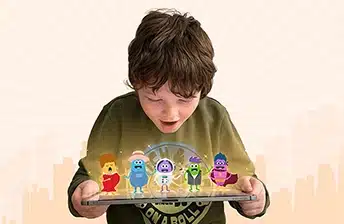
A young boy looking down suprised at an ipad with small animated characters standing on it

Dr Petra Karlsson awarded lead My Voice Library grant
2021

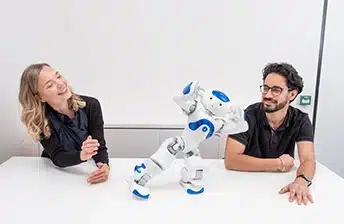
Technology program established, and Petra Karlsson appointed as Technology Lead
2021

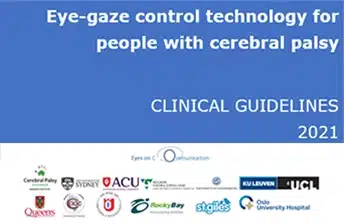
Dr Petra Karlsson published the Eye-gaze control technology clinical guidelines 
2020

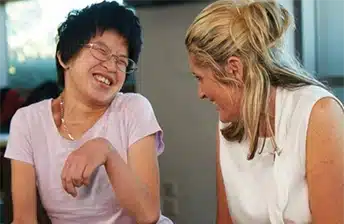
CP-Achieve was awarded led by Prof Dinah Reddihough, Murdoch Children’s Research Institute, and Dr Ingrid Honan one of the chief investigators
2020

CP Strategy launched, with Dr Ingrid Honan as the Chair and co-author, of which technology priorities were reinforced for the field of cerebral palsy 
2019
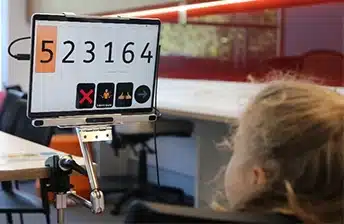
A young girl participating in the cogtest study

CogTEST-C recruitment commenced led by Dr Petra Karlsson and Dr Ingrid Honan
2017
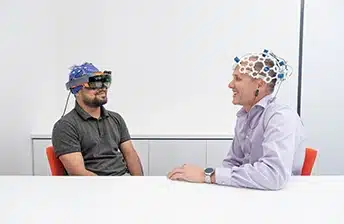
Alistair McEwan and a colleague using

Prof Alistair McEwan appointed Ainsworth Chair of Innovation and Technology
Our projects

Priority 1: Cognition

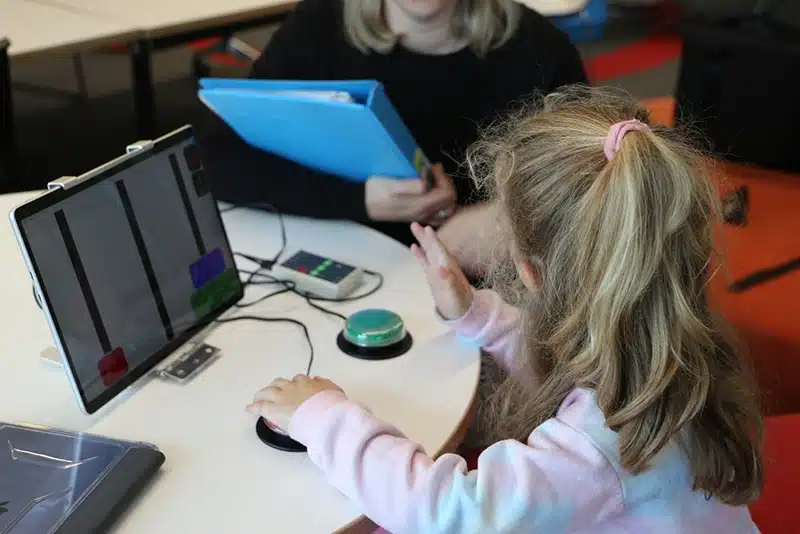
Did you know less than 1 in 3 children with cerebral palsy are able to participate in formal cognitive assessments due to communication challenges? To increase accessibility of these valuable thinking skills assessments, we have adapted a number of assessment tools that can be administered via switch and eye-gaze control technologies.

We now invite children aged between 5 and 15 years, currently using switch and eye-gaze technology, to help us test accessibility of these tools for children with motor and speech impairment.

If you or your child want to get involved, or read more information, please contact Dr Petra Karlsson at pkarlsson@cerebralpalsy.org.au or 0447 508 661

Many developmental assessments require children to show us what they know by using their hands to interact with toys. This is not accessible for some children with cerebral palsy. We are evaluating how children with CP complete a developmental assessment that has been adapted for motor and vision impairments.

Recruitment has closed.

If you or your child would like more information, please contact Dr Ingrid Honan; ingrid.honan@cerebralpalsy.org.au

Priority 2: Communication

In collaboration with the Holland Bloorview Research Institute in Canada, CPA are developing a software for recognising sound or facial movements from a user. These movements and sounds can then be used as commands for controlling a computer or communication board. Switch-App is an AI based program that can learn a person’s specific movement and keywords, so that it can be used easily by the user in a home environment.

We are a multi-stakeholder research team, including people with lived experience of cerebral palsy, clinicians, engineers and researchers conducting a research study to create a database that will be used by engineers to develop technology to improve communication for children with cerebral palsy with dysarthria. If you are interested in participating, or would like to learn more please email myvoicelibrary@cerebralpalsy.org.au.

SQUID – Standalone Quadripartite User Interface Device.This product is designed to provide people with cerebral palsy who use assistive technology for communication, and their clinicians, access to easily set up two-way telerehabilitation for remote learning and therapy sessions.

Priority 3: Mobility

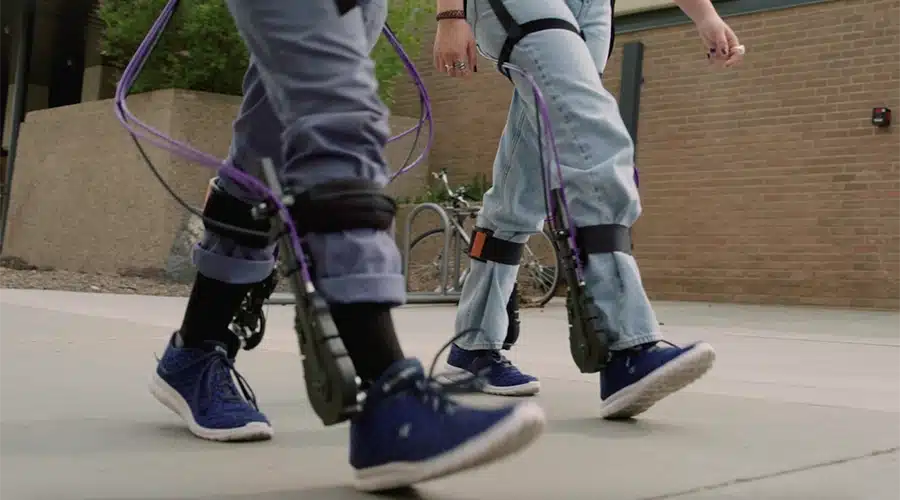
CPA is collaborating with the Chinese University of Hong Kong utilising pneumatic actuators as a ‘soft exoskeleton’ to assist with different movements (such as walking or sit to stand) for children with cerebral palsy. Inflatable cuffs are place around the knees, and when inflated, assist the child to stand up and walk.

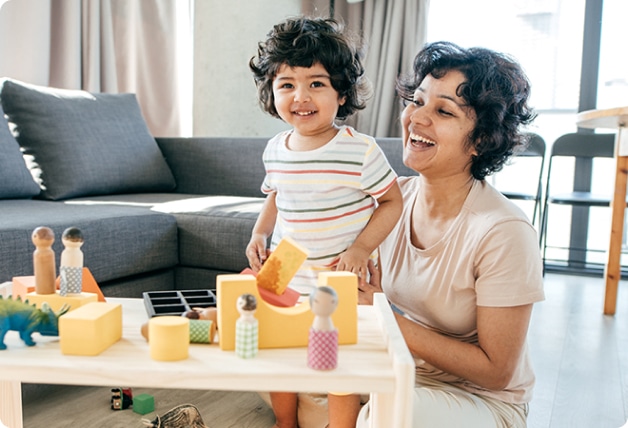
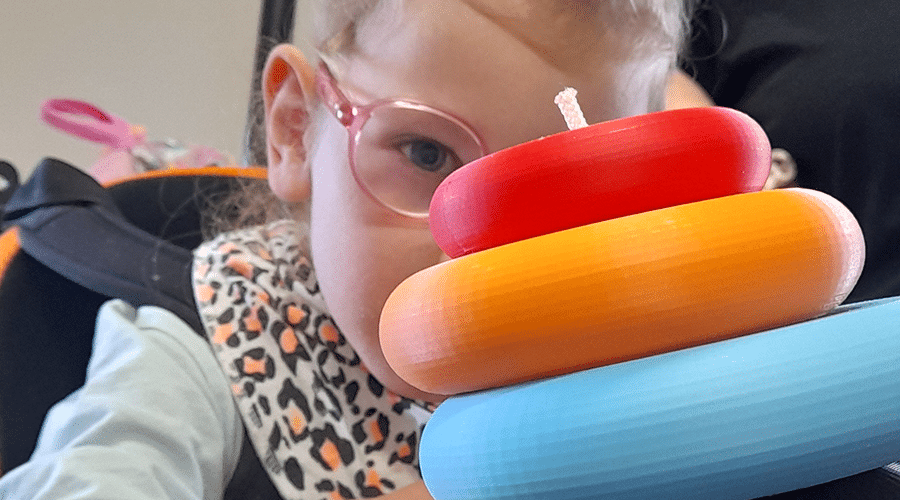
We are looking at modifying toys to better suit the needs of children with disabilities. We currently have multiple engineering honours students adapting different toys, including an accessible busy board and a touch-free instrument.

Technology advisory group

Partnering with people with lived experience is integral to everything we do.

Please click the link below to express your interest in joining our technology advisory group.

Name

The technology team

Our team is a multidisciplinary group of individuals focused on innovating and evaluating technology treatments for infants, children, youth and adults with cerebral palsy. 

The team is led by Dr Petra Karlsson and Prof Alistair McEwan from the University of Sydney. This important clinical partnership provides a valuable opportunity for interdisciplinary collaboration between people with lived experience of cerebral palsy, researchers, engineers and clinicians to facilitate evidence-informed practice with a focus of technology. 

Researcher Dr Petra Karlsson

Dr Petra Karlsson

Program Lead Technology

Petra leads a program of research that focuses on bringing allied health and biomedical engineering together, at the AHa Engineering Lab (Allied Health and Engineering). The Aha Engineering lab has a focus on innovative tech, creating multiple devices to support functioning in daily across mobility, cognition and communication investigated the use of participation to support functioning in daily activities for individuals living with severe cerebral palsy. 

Alistair McEwan

Chair of Technology and Innovation

Harness advancing technology and innovation to accelerate the search for new and improved treatments and interventions for childhood disabilities. 

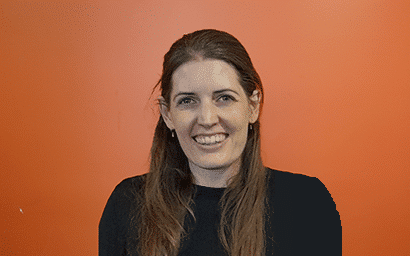
Ingrid Honan

Dr Ingrid Honan

Senior Research Fellow

Responsible for implementing projects with a focus on mental health, cognition and well-being across the life span, and is Co-Chair of the Australian and New Zealand Cerebral Palsy Strategy. 

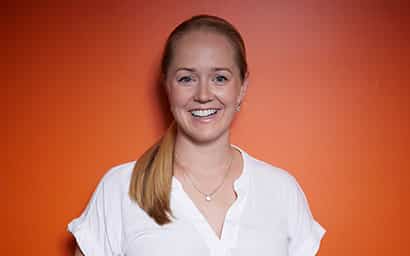
Nicola Postol

Dr Nicola Postol

Research Fellow

Nic is currently working on a feasibility study with a soft knee exoskeleton with children aged 2-5, infant treadmills, and two systematic reviews; one evaluating the use of overground wearable robotics for people with CP, and the second looking at the impact of mobility technology on school-aged children.  

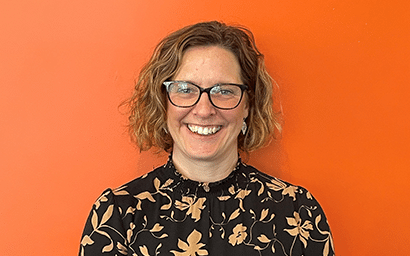
Annemarie Murphy

Dr Annemarie Murphy

Research Fellow

Annemarie is currently working on a range of projects focused on access to technology for communication. She is collaborating across disciplines to develop technology to support communication and literacy for individuals with complex communication needs. She is involved in mentoring and supervising engineering and speech pathology students and practicing clinicians. 

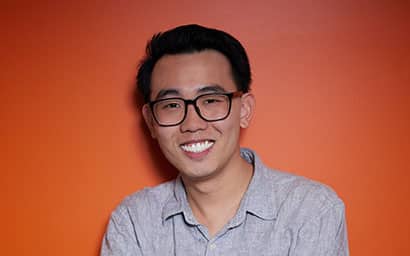
Darryl Chiu

Darryl Chiu

Senior Research Assistant

Darryl supports various innovative projects across research and industry, and is currently working on multiple projects that use technology to assist and improve the cognition, communication, and mobility of people with cerebral palsy. 

Dr Sabrina Schaly

Dr Sabrina Schaly

Postdoctoral Researcher

Dr. Sabrina Schaly is a post doctoral researcher from the University of Sydney that works closely with the Cerebral Palsy Alliance Technology Team. She is specialised in biomedical engineering, assistive technology, and AI-enabled health solutions. Her research focuses on co-designing inclusive technologies for pain and stress communication, developing low-cost assistive devices, and advancing multimodal AI for health empowerment. 

PhD Candidates

Wesley Zhang
University of Sydney, Engineering
Caregivers’ Lived Experiences of Procuring Toys and Technologies for Children with Neuromotor Disabilities to Shape Design Innovation – A Co-Designed Narrative Inquiry 

Victoria Norris 
University of Sydney, Engineering

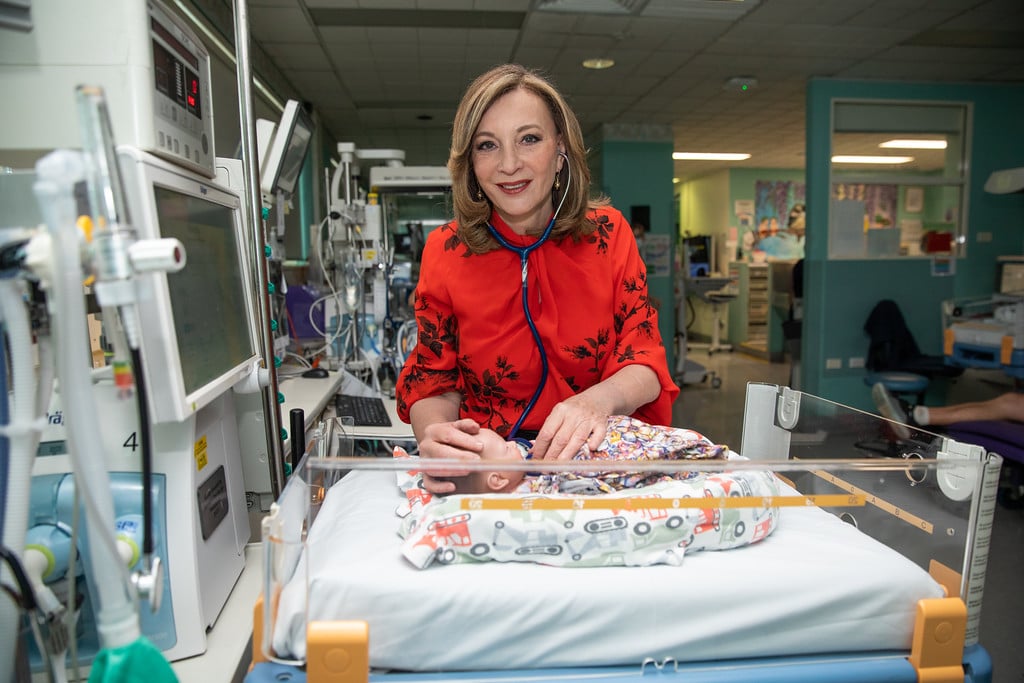
Music to Baby’s Ears. Perspective of key stakeholders and study of infant physiological responses to music therapy in the Neonatal Intensive Care Unit (NICU) 

Yueting Zhan
The University of Sydney, Faculty of Psychology
Beyond Motor Challenges: Valid Executive Function Assessment in Cerebral Palsy through a Metacognitive Lens
 

Amanda Burman Rimstedt
Lund University, Lund Disability Research Centre
Pain in children with spina bifida and cerebral palsy

Pierre Najjarin
University of Sydney, Engineering
Improving the Accessibility and Rehabilitative Function of an Existing Soft Exoskeleton in a Paediatric Setting

Karen Bau
The University of Sydney, Faculty of Medicine and Health
Pain in children and young people with physical disabilities undergoing lower limb orthopaedic surgery

Masters Students

Stacey Mills
The University of Sydney, Westmead Clinical School
Play for play sake – Understand play for children with non-ambulatory cerebral palsy:  Perspectives of parents and therapists.

Antony Clements
The University of Sydney, Faculty of Engineering
It’s all about the story: You can’t experience it if you can’t play it.

Honours Students

Sophia Legget
University of Newcastle, Physiotherapy Parenting beyond diagnosis: A qualitative analysis of parenting a child with  lifelong mobility issues in a rural area 

Past students: 

Joni Cooper-Johnston
University of Newcastle, Physiotherapy

More than movement: The influence of walking frames on non-motor development in children with cerebral palsy: a systematic review 
 

Haifeng Zhao
University of Sydney, Engineering 
Wearable AAC technology: a novel way for communication for people with complex communication needs

Simanto Saha
University of Sydney, Engineering
Toward A Generalised Signal Processing Framework for Inter-Subject Associative BCI
 

Communicating research

Find out more about the latest technology news and research.

Stay up to date with cerebral palsy technology research

Get updates on the latest technology research on cerebral palsy.

Contact us

Dr. Petra Karlsson
Program Lead, Technology
Email: pkarlsson@cerebralpalsy.org.au

Prof Alistair McEwan
Chair of Innovation and Technology
Email: alistair.mcewan@Sydney.edu.au