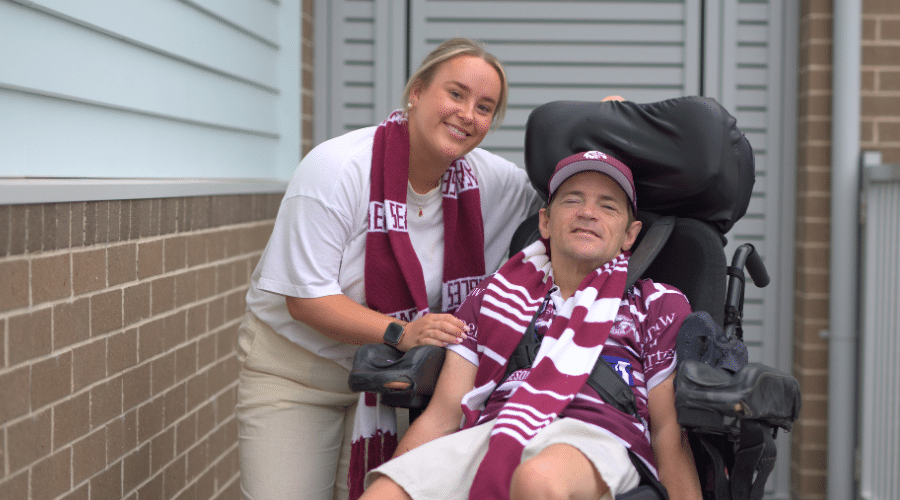
Finding the right home is more than choosing a place to live. It’s about having the right support, housemates you get along with and share interests with, and the freedom to make everyday decisions.
Supported Independent Living (SIL) through Cerebral Palsy Alliance (CPA) provides personalised support in a safe and welcoming home, helping people with disability live as independently as possible.
Supported Independent Living is NDIS-funded assistance delivered by support workers in your home. Depending on your individual needs and goals, SIL support may include:
Download our free SIL eBook for practical information about NDIS funding, the SIL process with CPA.
With CPA, you remain at the centre of decisions about your routines, activities and support.
Supported Independent Living (SIL) and Specialist Disability Accommodation (SDA) are related, but they fund different things.
SIL funds the support you receive at home. This includes assistance from support workers with daily tasks, personal care and building independence.
SDA funds the physical home itself. While it includes highly accessible homes for physical disabilities, it is also designed for people with behavioural, sensory, or cognitive needs who require a specialised environment to live safely and independently.
You can receive SIL funding without SDA funding. Eligibility for SIL does not depend on living in Specialist Disability Accommodation – you may receive SIL support in a private rental, a home you own or a shared home. Some CPA homes require SDA funding, while others do not.
SIL may be suitable if you have higher support needs and require significant assistance at home throughout the day, overnight or seven days a week.
The NDIS considers your goals, daily support needs and whether SIL is a reasonable and necessary way to help you live more independently. Evidence may include an occupational therapy functional assessment and reports from other health professionals. A Support Coordinator can help you explore your housing options, gather evidence and apply for the appropriate funding.
We understand that everyone’s circumstances, goals, and funding arrangements are different. If you’re interested in this home and have available Core funding, we encourage you to get in touch with our team. We are happy to discuss your individual situation, explore potential options, and help you understand what pathways may be available to support your housing goals.
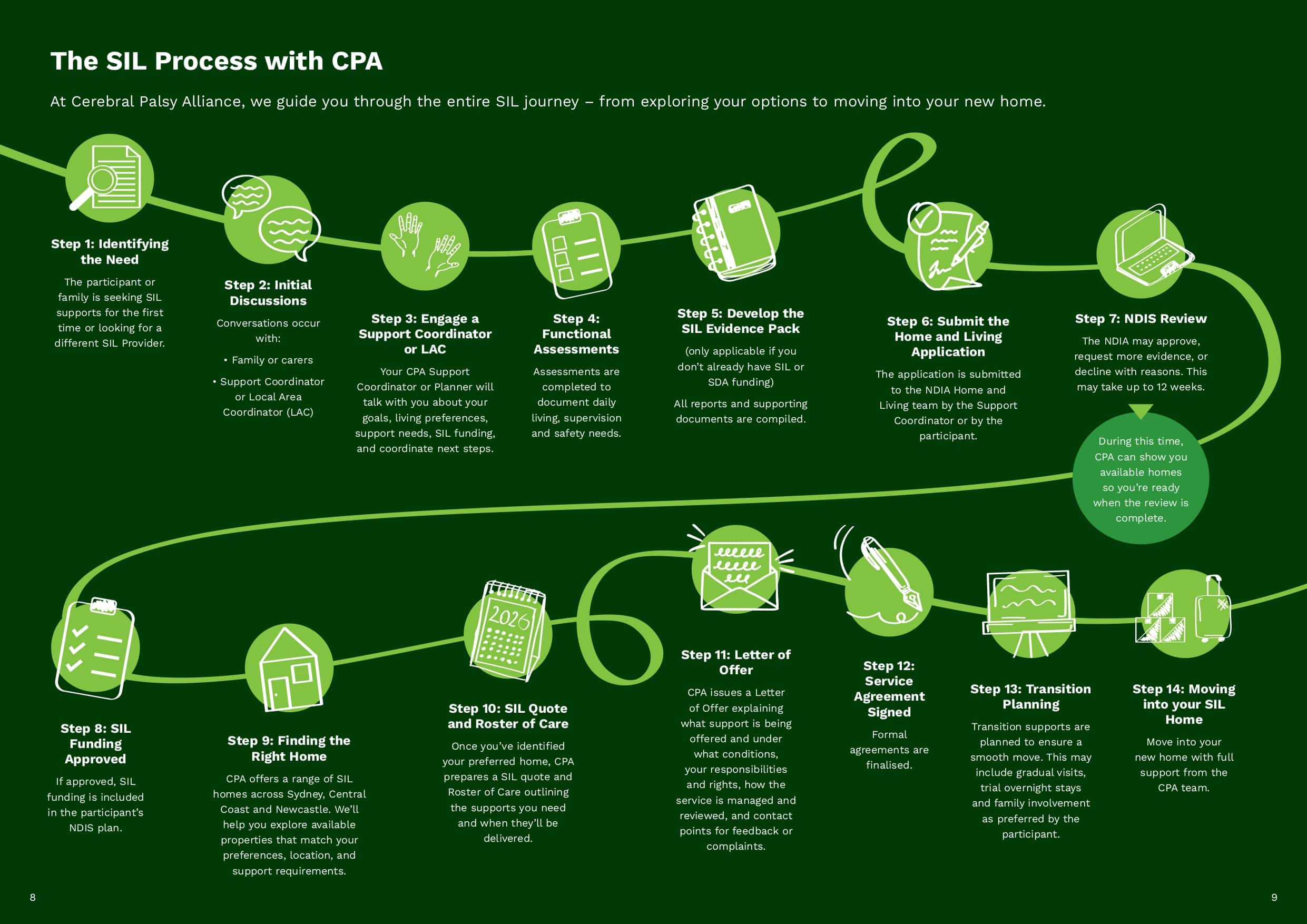
At Cerebral palsy Alliance, we guide you through the entire SIL journey – from exploring your options to moving into your new home.
The participant or family is seeking SIL supports for the first time or looking for a
different SIL Provider.
Conversations occur with:
• Family or carers
• Support Coordinator
or Local Area
Coordinator (LAC)
Your CPA Support Coordinator or Planner will talk with you about your goals, living preferences, support needs, SIL funding, and coordinate next steps.
Assessments are completed to document daily living, supervision and safety needs.
(only applicable if you don’t already have SIL or SDA funding)
All reports and supporting documents are compiled.
The application is submitted to the NDIA Home and Living team by the Support Coordinator or by the participant.
The NDIA may approve, request more evidence, or decline with reasons. This may take up to 12 weeks.
During this time, CPA can show you available homes so you’re ready when the review is complete.
If approved, SIL funding is included in the participant’s NDIS plan.
CPA offers a range of SIL homes across Sydney, Central Coast and Newcastle. We’ll help you explore available properties that match your preferences, location, and support requirements.
Once you’ve identified your preferred home, CPA prepares a SIL quote and Roster of Care outlining the supports you need and when they’ll be delivered.
CPA issues a Letter of Offer explaining what support is being offered and under what conditions, your responsibilities and rights, how the service is managed and reviewed, and contact points for feedback or complaints.
Formal agreements are finalised.
Transition supports are planned to ensure a smooth move. This may include gradual visits, trial overnight stays and family involvement as preferred by the participant.
Move into your new SIL home with full support from the CPA team.
Finding a good match is an important part of the process. CPA considers your goals, support needs, preferred location, lifestyle and compatibility with potential housemates. You can ask questions, explore suitable homes and involve your family, supporters or Support Coordinator along the way.
CPA has Supported Independent Living vacancies across Sydney, Newcastle, the Hunter and the Central Coast. Explore CPA vacancy listings for information about our available properties, accessibility, location, housemates and the type of resident who may be a good fit. If there are no current vacancies in your preferred area, you can join our waitlist, and we’ll let you know when a suitable home becomes available.
Choosing a new home is a big decision, but you don’t need to work through it alone. Whether you are beginning your NDIS housing journey, considering a move from your current home or looking for the right SIL provider, CPA is here to help.
Call 1300 888 378, email ask@cerebralpalsy.org.au or submit an enquiry to start a conversation with our friendly team.
Download our free SIL eBook for practical information about NDIS funding, the SIL process with CPA, finding the right home and preparing for your move.