Welcome to our 2026 June Institute Newsletter. Explore news about successful grants, exoskeletons, and more!
This newsletter consists of short summaries of completed research led by the CPA Research Institute, our colleagues, international highlights, and information about CPA Research Institute studies which are currently recruiting.
Please see the glossary located at the bottom with definitions for bolded keywords used within summaries. Keywords in summaries will only be bolded the first time they are used.
If you have any suggestions/feedback for this newsletter or questions for the researchers, please contact us here.
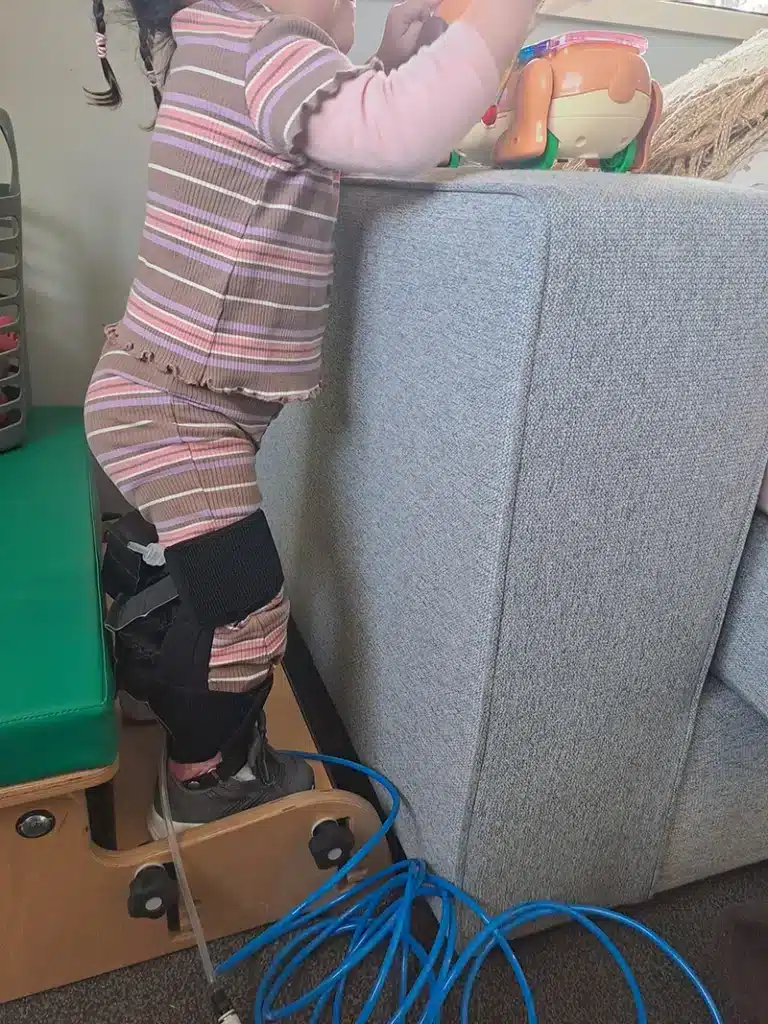
Dr Nicola Postol and Professor Alistair McEwan have been awarded $98,170 from the Lionel and Yvonne Spencer trust to further develop a soft knee exoskeleton to support early mobility for children with cerebral palsy.
The aim of this work is to maximise impact by creating a simple, low-cost device, which can be used by parents to increase volume of practice, and be incorporated into a walking frame to enable independence. To ensure feasibility is comprehensively evaluated, the study will include both regional and metropolitan sites within NSW. Long term, the hope is for this study to improve access to mobility technology in low- and middle-income countries.
See here for more information!
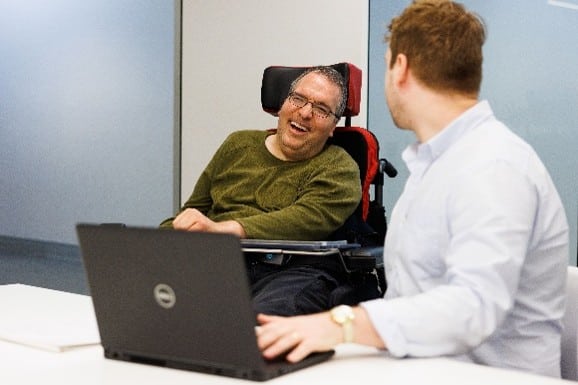
Dr Petra Karlsson has recently become an international partner of a $4.5 million Canadian research project, Developing a Modular Communication Assistant for Persons with Speech Impairment. The project is funded by the NSERC Alliance Society Grant and will be led by Professor Claire Davies from Queen’s University, Canada.
The aim of this work is to improve the accessibility and inclusivity of communication in the workplace for people with speech impairments. The project will be a global collaboration of researchers, engineers, clinicians, employers and people with lived experience to create new communication technologies focusing on increasing participation and belonging.
You can find more information here.
Authors: Nicola Postol, Darryl Chiu, Wesley Bobby-Joy, Annabel Webb, Ismail Sadozai, Luke Wakely, Jodie Marquez, Alistair McEwan, Petra Karlsson
This review summarised the evidence for the use of overground exoskeletons in people with cerebral palsy (CP). Twenty-one studies, representing 241 people (only 7 of which were adults) evaluated nine different devices. Key findings included statistically significant improvements in walking speed and endurance, balance, and high-level gross motor function (such as running and jumping) after robotic intervention, compared with typical therapy. Whilst promising, the lack of follow-up means it is not possible to determine whether the benefits were sustained long term. Few studies evaluated user experience; those that did reported robotic intervention was highly acceptable. Many other outcomes were reported, but with insufficient data to make recommendations. Find out more here.
This accompanying piece in The Conversation also provides more information: Exoskeletons for people with cerebral palsy are now a reality – but there’s still much to figure out

Author: Petra Karlsson
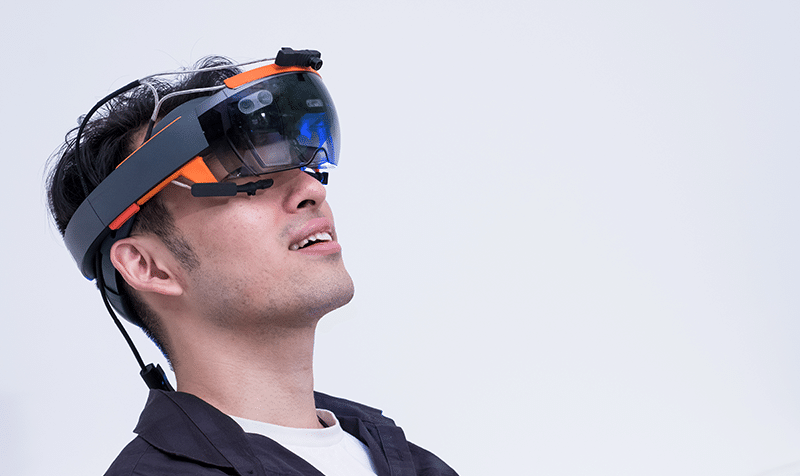
This commentary of a study by Hervo and colleagues discusses research on the use of extended reality (XR) in children’s rehabilitation. XR can make therapy more engaging by transforming repetitive exercises into interactive, game-like tasks that encourage movement, thinking and participation. Emerging research, including that of Hervo and colleagues, shows XR can improve independence and engagement but also highlights overlooked factors such as emotional safety, therapist roles and adaptable interfaces. There are key challenges that remain: unknown long-term neurodevelopmental effects, inequitable access, data privacy risks and shifting clinician competencies. XR should be used alongside traditional therapy, guided by ethical frameworks, family-centred practice, and careful tailoring to each child’s developmental and sensory needs. Find out more here.
Authors: Md Nuruzzaman Khan, Atika Rahman Chowdhury, Shimlin Jahan Khanam, Israt Jahan, Mohammad Muhit, Sarah Mcintyre, Nadia Badawi, Gulam Khandaker
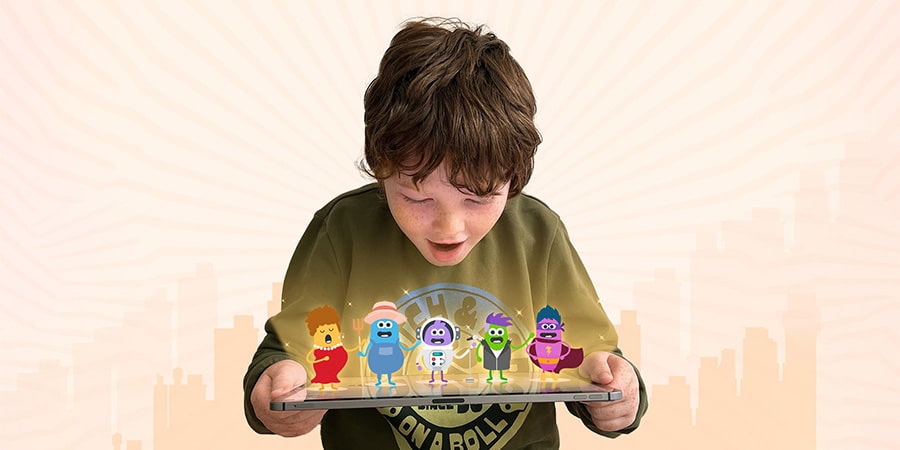
This study looked at trends in child health across South Asia over almost 40 years. Researchers found that while far fewer children are dying before their fifth birthday, more children are living with disabilities. This is likely because advances in newborn and child health care mean that many babies who would not have survived in the past are now surviving, including those born prematurely or with serious health complications. For children with cerebral palsy and other developmental disabilities, this is an important sign of progress. However, it also highlights the growing and continued long term need for early intervention, rehabilitation, education, and family support services for children and families. Find out more here.

Research studies and clinical trials are a vital way to identify breakthroughs and advancements in the treatment and prevention of cerebral palsy.
Adaptable interfaces: Technology designs that can be adjusted to suit a person’s individual abilities, preferences, or needs.
Cerebral palsy (CP) – A complex physical condition that affects how a person’s muscles work and how they move throughout their lives. It is caused by early damage to part of the brain, which doesn’t worsen over time but it’s consequences can become more impactful. Each person with CP is unique, and while all having some degree of physical disability, many experience additional learning, communication, visual and/or other challenges. (Dan et al., 2026)
Clinician competencies: The knowledge, skills, and abilities that healthcare professionals need to provide effective and safe care.
Developmental disabilities: A group of conditions that begin during childhood and affect a person’s physical, learning, communication, or behavioural development.
Early intervention: Services and supports provided early in a child’s life to promote development and improve outcomes.
Emotional safety: A feeling of being supported, respected, and free from fear, distress, or harm when participating in activities or receiving care.
Extended reality (XR): A term that includes virtual, augmented, and mixed reality technologies that create immersive and interactive experiences.
Family-centred practice: An approach to care that recognises and supports the important role of families in decision-making and service delivery.
Gross motor function: Large body movements involving muscles of the arms, legs, and trunk, such as walking, running, jumping, and balance.
Neurodevelopmental effects: Impacts on the growth and development of the brain and nervous system, which can influence movement, learning, behaviour, communication, and other abilities.
Overground exoskeletons: Wearable robotic devices that support or enhance movement while a person walks over regular ground rather than on a treadmill.
Prematurely: Being born before 37 completed weeks of pregnancy.
Rehabilitation: Therapies and interventions that help people improve or maintain physical, communication, cognitive, or daily living skills.
User experience: A person’s overall experience, satisfaction, and perceptions when using a product, technology, or service.