Welcome to the 2026 July Research Institute Newsletter. Read about cytomegalovirus (CMV), physical activity for people with CP, making children with CP from low- and middle-income (LMIC) countries visible and more!
This newsletter consists of short summaries of completed research led by the CPA Research Institute, our colleagues, international highlights, and information about CPA Research Institute studies which are currently recruiting.
Please see the glossary located at the bottom with definitions for bolded keywords used within summaries. Keywords in summaries will only be bolded the first time they are used.
If you have any suggestions/feedback for this newsletter or questions for the researchers, please contact us here.
In July 2026, researchers, clinicians, advocates, policymakers and families with lived experience came together for the CMV Advocacy in Action Workshop, a collaboration between Mercy Hospital for Women and Cerebral Palsy Alliance, led by Professor Lisa Hui and Associate Professor Hayley Smithers-Sheedy. The workshop was made possible through the generous support of the Norman Beischer Medical Research Foundation.
The program featured powerful lived-experience perspectives from Hannah Croker and Rachael Casella, alongside presentations from Kath Swinburn, Pam Rogers, Professor Euan Wallace and the Hon. Jaala Pulford.
Facilitated by Rob Gilbert (Cerebral Palsy Alliance), the workshop built on existing CMV advocacy efforts and highlighted the power of collaboration between people with lived experience, researchers, clinicians, advocacy organisations and policymakers. By bringing these perspectives together, the initiative has generated important momentum towards establishing a coordinated national advocacy network to ensure families are informed, supported and connected to timely care.
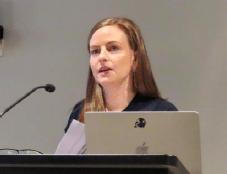
Hannah Croker during her lived-experience address
Authors: Yueting Zhan, Ingrid Honan, Petra Karlsson, Kit Double, Yunze Li, Remy Blatch-Williams, Hamna Khan, Damian Birney
This review pooled data from 43 studies involving more than 1,200 children with cerebral palsy (CP) to examine executive function and related thinking skills. Overall, children with CP experienced greater difficulty on tasks compared to children without CP, particularly with those involving processing speed, long-term memory, and visual-spatial skills. However, timed tests tended to produce larger gaps between groups than untimed measures. This suggests that some differences may reflect functional challenges, such as limited motor control or slower verbal responses, rather than thinking ability alone. In support of this, tests adapted to accommodate children’s functional capabilities showed smaller gaps. Clinicians should therefore consider motor, communication, and visual abilities when selecting and interpreting cognitive assessments. More accessible and appropriately adapted measures may provide a fairer picture of a child’s strengths and support needs, helping families and clinicians make better-informed decisions about intervention and care. Find out more here.

Authors: Emily Shepherd, Alice Rumbold, Sarah McIntyre, Shona Goldsmith, Tasneem Karim, Amy Keir, Amanda Poprzeczny, Rod W Hunt, Nadia Badawi, Christopher J D McKinlay, Caroline A Crowther, Lisa N Yelland, Australian and New Zealand Neonatal Network; ANZNN
Magnesium sulfate is a simple, low-cost treatment given to women before a very preterm birth. Clinical trials have shown that it helps protect a baby’s developing brain. In this study, the team used health records from 6763 children born extremely preterm in Australia and New Zealand to understand whether magnesium sulphate makes a difference in the ‘real world’, outside of a research study. They found that children whose mothers received magnesium sulfate were more likely to survive without cerebral palsy or serious disability at 2–3 years of age. These findings provide strong support for ongoing and improved use of magnesium sulphate in the ‘real world’, to help protect the developing brains of very preterm babies.

Authors: Helen G Liley, Rod W Hunt, Rachel L O’Connell, Malcolm R Battin, Iona Novak, Yvonne W Wu, Roberta Ballard, Lisa Askie, Nadia Badawi, Alpana Ghadge, Susan E Jacobs, Sandra E Juul, Lucille Sebastian, Deepika Wagh, R John Simes; PAEAN Study Investigators
Neonatal Hypoxic-ischaemic encephalopathy (HIE) is a serious brain injury that can occur when a baby’s brain does not receive enough oxygen just before birth. Researchers tested whether erythropoietin (EPO), a medicine thought to protect the brain, could improve outcomes when given alongside standard cooling treatment. In this study of 313 babies from Australia, New Zealand and Singapore, EPO did not reduce the risk of death, cerebral palsy, or developmental difficulties by 2 years of age compared with cooling treatment alone. Importantly, no major safety concerns were found. These results suggest EPO does not provide additional benefit for babies with HIE. Find out more here.

Authors: Leanne Sakzewski, Sarah Reedman, Catherine Elliott, Iona Novak, Stewart G Trost, Annette Majnemer, Keiko Shikako, Robert Ware, Lynda McNamara, Sian Williams, Denise Brookes, Roslyn N Boyd
Children with cerebral palsy (CP) often face barriers to joining sports, recreation, and other physically active leisure activities. This study led by the University of Queensland tested Participate-CP, a 12-week program that helps children and families identify meaningful activity goals and overcome barriers to participation. Researchers found that children who received Participate-CP were better able to achieve their participation goals, moved with greater intensity during everyday activities, experienced fewer barriers, and took part in community activities more often than those receiving usual care. Although the program did not increase time spent in moderate-to-vigorous physical activity, it successfully improved participation, confidence, and opportunities for active involvement in everyday life.

Authors: Thembi Katangwe-Chirwa, Israt Jahan
For years, children with cerebral palsy (CP) in low- and middle-income countries (LMICs) were overlooked because information on their lives, health and needs was not collected. Over the past decade, CP registers in Bangladesh, Malawi, Vanuatu and Brazil, connected through the Global LMIC CP Register, have helped make these children visible. Data show CP may be more common than previously thought, while delayed diagnosis and limited rehabilitation remain major challenges. Importantly, these registers are improving services, informing policy and supporting early intervention. The authors call for investment and global action to ensure children with CP have opportunities to thrive. Find out more here.

Authors: Aoife Branagan, Tim Hurley, Dearbhla Byrne, Fiona Quirke, Declan Devane, Petek E Taneri, Nadia Badawi, Cynthia F Bearer, Frank H Bloomfield, Sonia L Bonifacio, Geraldine Boylan, Suzann K Campbell, Lina Chalak, Mary D’Alton, Linda S de Vries, Mohamed El-Dib, Donna M Ferriero, Chris Gale, Pierre Gressens, Toto Gronlund, Alistair J Gunn, Sarah Kay, Deirdre M Murray, Karin B Nelson, Betsy Pilon, Nicola J Robertson, Karen Walker, Courtney J Wusthoff, Eleanor J Molloy; Steering Group for DEFiNE (Definition of Neonatal Encephalopathy)
Neonatal encephalopathy is a condition with multiple causes, where a newborn baby shows signs that their brain is not functioning typically. Different terms, such as neonatal encephalopathy, hypoxic-ischaemic encephalopathy (HIE), and birth asphyxia, are often used inconsistently, which can create confusion for families and health professionals. In this international study, experts, researchers, and families from 52 countries worked together to agree on a clear definition. The new definition recognizes that neonatal encephalopathy can have many causes and different levels of severity. The authors hope this shared definition will improve diagnosis, communication, research, and care, helping families better understand their child’s condition and potential outcomes.

Research studies and clinical trials are a vital way to identify breakthroughs and advancements in the treatment and prevention of cerebral palsy.