The group was launched in 2015 to better involve people with lived experience of cerebral palsy into research.
Cerebral Palsy is a complex and varied condition and everyone’s experience is different and unique –it is these unique perspectives that are vital for researchers to deeply understand when conducting CP research.
Involving the CP community in research:
Your experience as a person with cerebral palsy or as a family member is incredibly valuable to research.
When you become a research partner on a project, you become part of the research team. You’ll help shape research projects by sharing your insights to;
You don’t need any science or research experience. Your experience of cerebral palsy is your expertise.
Register your interest by filling out the expression of interest form.
Once your form is receieved, you’ll be contacted with the next steps.

Are you interested in helping influence the direction of genetic research in cerebral palsy (CP)?
As this specific area of CP research continues to gain momentum, the Cerebral Palsy Research Institute has started a Community Reference Group for CP Genomics.
This group will help make sure the voices of people with lived experience of CP will be heard.

Are you interested in stem cells and cell therapies for cerebral palsy?
The purpose of the Cerebral Palsy Alliance Stem Cell Reference Group is to provide the perspective of people with cerebral palsy and their families to shape the priorities and the design of new cell therapy research projects, as well as keep abreast of new updates in this research area.

This reference group focuses on building a greater understanding of the needs and wants of people with cerebral palsy who have significant support needs.
Through collaboration and sharing of lived experiences, the group members are helping to establish areas of priority and shape future decisions and actions around research, advocacy and resourcing projects.
One of the topics that was discussed early on after the formation of the 5 Star Rated group was terms that are used to describe the varying degrees of cerebral palsy. As a group we acknowledged that the use of formal terminology such as GMFCS is internationally recognised and used by medical and health professionals and referred to in literature. However, it is not language that we as individuals like to use in reference to our disability. Following collaboration as a group and discussion about terms that were not acceptable when describing someone with GMFCS IV & V (such as severe) and terms that were acceptable, we developed a consensus that a ‘person with significant support needs’ is the preferred phrase to use.
Continuing with the theme of changing language that society uses to describe disability is identifying existing resources and possible development of new resources that help people, in particular medical and health professionals, to reframe their view of how they think about a person’s abilities. Look out for some new resources that we hope to start circulating within NSW that will help people to articulate the things that they can do and communicate a better way of talking about people with a disability.
We’re dedicated to working collaboratively with people with cerebral palsy, families, and the wider community to ensure that our research is informed by, and meaningful to, people with cerebral palsy.
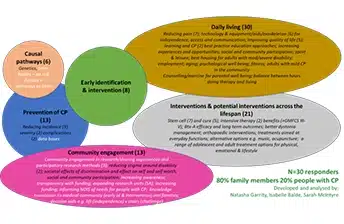
Back in 2010, we published the first research priorities of people with lived experience of CP, as well as researchers and clinicians. In 2018, CP Quest updated those priorities.
In 2025 we’ve identified the priority setting for cerebral palsy research that has been conducted around the world with people with lived experience.
Interested in cerebral palsy research priority setting?

In 2026, we did a study to find out what CMV research questions mattered most to families and people with lived experience of CMV, as well as clinicians and researchers. By bringing these groups together, we identified clear, shared priorities for CMV prevention, diagnosis, treatment and support. We will use these priorities to guide future research, funding decisions and advocacy so that future research leads to real world improvements for families affected by CMV.
Are you a researcher or clinician looking to partner meaningfully with people with lived experience?
CP Quest is a large group of people with lived experience who are dedicated to improving CP research. We can help you connect with the CP Quest community through our research partner opportunity expression of interest.
For more information, please contact our CP Quest coordinator.
Let us know;
Here are some of the most frequently asked questions from people with lived experience, and researchers, about partnering on research.
If we haven’t covered your question below, please reach out to us directly!
CP Quest research partners are people with cerebral palsy (CP), and family members who are interested in research and want to be involved in the process. Their lived experience offers invaluable personal insights that shape our understanding, perspective and purpose of research. Their involvement entails collaborating with researchers to enhance and enrich CP research.
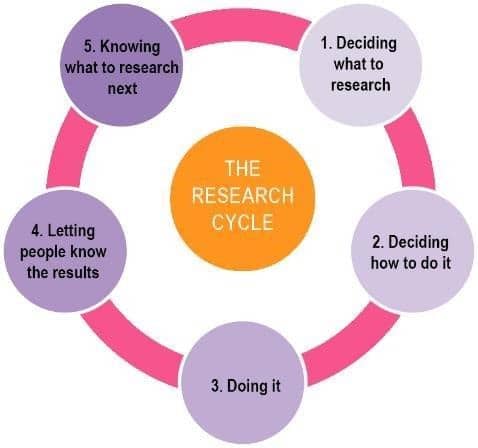
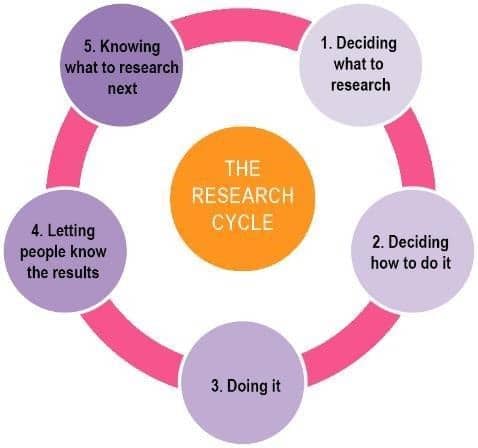
Being a research partner means that people with lived experience can get involved at various stages of the research cycle (pictured here). Each research partner’s contribution in research can look different to the next person’s and will likely be different on each project.”
A research partner is part of the research team, helping to shape, inform, and influence the research project. They work in partnership with the other research team members, such as medical and allied health professionals, statisticians, engineers, and epidemiologists.
A research participant is someone who voluntarily participates in human research as a subject, after giving informed consent to have information about them collected and stored for the purpose of the research. They are not part of the research team.
Engagement: is when information and knowledge about research is shared with people with lived experience so that they are better informed on why, how, where, and by whom research is conducted.
Involvement: is where people with lived experience actively and equally work with researchers or research organisations to help shape decisions about health research. Increasing involvement is our prime objective at CP Quest.
Participation: is when individuals voluntarily contribute data (after giving informed consent) that is studied as part of a research project
Usually, no.
If a person with lived experience is involved as a a research partner – for example contributing with planning, decision-making, or design, ethics approval is not required. In these roles, research partners are considered part of your research team, and you are not collecting data from them.
If you ask them to share personal experiences, attitudes, or knowledge that will be analysed as data, then ethics approval is likely needed.
Quick check:
If you’re unsure, speak with your local Human Research Ethics Committee or contact us for advice. This video below provides more information.
Welcome! Please complete the Join CP Quest membership form. We’ll reach out to say hi and will then contact you when research opportunities are available. When you see one of interest, reach out to the research team directly as stated in the Expression of Interest email. For further information about ways to use your lived experience as a research partner -please contact cpquest@cerebralpalsy.org.au.
First up, mail cpquest@cerebralpalsy.org.au with a brief overview of your project and how you’d like to involve people with lived experience.
If you’re unsure or have any questions, we can meet to talk through meaningful ways to include research partners.
Once we understand your project, we’ll ask you to complete an Expression of Interest (EOI) template. Please keep your EOI clear concise and in plain language, explaining who you are looking for and how they will be involved.
We’ll share your EOI with our CP Quest network. Interested people will contact you directly, and the CP Quest Coordinator will support you through the process.
For help or more information, email cpquest@cerebralpalsy.org.au.
No, we don’t recommend asking for a CV/RESUME. The most important expertise that research partners hold is their lived experience – and this is rarely represented comprehensively in a CV! The most important thing is that their lived experience relates to your project.
Instead, connect by email, video call, or in person to discuss their interests and insights.
If you need specific skills, include them in your Expression of Interest (EOI) and arrange a one-on-one chat to confirm a good fit for the research partner and your team.
Start by contacting the research partner by email, phone, or video call to arrange a time to chat. Use this first conversation to get to know each other a little.
Share more information about your project, including:
Talk through what the research partner role might involve, including expected tasks, time commitment, and level of involvement.
Together, check whether the role feels like a good fit for both the research partner and your team. It’s okay for either side to decide not to proceed at this stage.
Be flexible and respectful of their time. Offer meeting times that suit different schedules, including evenings. Ask about preferred format (online or in person) and use polls to choose options. Check in after meetings—people often share extra ideas later, and a follow-up email/call or text helps every voice be heard.
There’s no set role. It depends on your project and your preferences.
Early in the project, meeting more often can help build understanding, trust, and momentum. Be clear about expectations from the start, including that research projects often move slowly and have busy and quiet stages.
It’s important to stay in touch, even during quieter periods. If there are delays—or progress is slower than expected—let your research partner know. Regular updates, even brief ones, help maintain trust and connection.
Circumstances can also change for research partners. A strong, respectful relationship makes it easier for people to adjust their level of involvement or step back if needed.
Good communication is key.
Online meetings work best when accessibility is planned from the start. Begin by asking your research partner. About their access needs and offer different ways to join the meeting. Send a clear invitation and re-share the ink on the day.
During the meeting
Research can be complex and involve specialised language and concepts. Supporting research partners to engage well starts with clear, shared understanding.
Use plain language to explain the big ideas, project context, and key details. Avoid jargon where possible, and explain new or technical terms when they arise. Remember that research partners bring valuable lived and broader experience, even if the subject area is new to them.
During meetings, pause regularly and invite questions by asking things like:
Yes, remuneration is best practice. Electronic gift cards are often easiest—ask what type of card your research partners prefer. Cash or honorariums can be complex (tax implications, forms).
Check state guidelines and have a clear process. NSW Guidelineshttps://hcnsw.org.au/wp-content/uploads/2025/08/Remuneration-and-reimbursement-of-health-consumers-FINAL-July-2025.pdf If your organization has different payment rules, explain them clearly from the start. Support your research partner by guiding them through each step of the payment process.
Be respectful if someone declines a reward.
Discuss this upfront. Agree on how often— for example after each meeting or after several sessions or several months. Logging time can help. Set clear expectations early and ensure payment within the agreed timeframe.
Consider using an involvement log – CP Quest can provide a template. Support research partners to complete this. If the log is not accessible, agree on a method that works for your partner.
Research partners should be acknowledged as equal members of the research team. Have conversations early about how contributions will be recognised, just as you would with any colleague.
Acknowledge the expertise and lived experience research partners bring by recognising their contributions in reports, presentations, and publications. When appropriate, research partners may be included as co‑authors or co‑presenters.
Plan ahead to support involvement in conferences or presentations, including discussions about funding, time commitments, and availability.
CP Quest has identified a selection of useful resources. Please note that there are many additional resources available to support people with lived experience as partners in research projects – these are just a few that may be helpful.
We would love to hear from you! Please reach out to our CP Quest Coordinator, Sophie.
At CP Quest, we create a safe and welcoming space for people with lived experience to connect and share their involvement in research.
We run relaxed drop-in sessions where you can ask questions, share ideas, learn from others, and hear how projects are progressing. It’s also a great way to meet other CP Quest members and build a sense of community.
These sessions are held twice a year or as needed, and both researchers and CP Quest members will be notified when they are coming up.
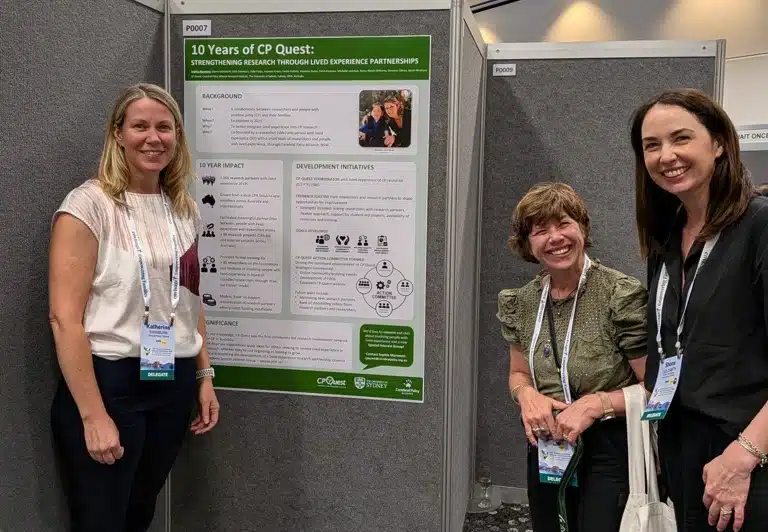
As a complex and varied condition, everyone’s experience of cerebral palsy is different and unique – and it is these unique perspectives that are vital for researchers to deeply understand when conducting research into treatment and prevention of CP.
To date, CP Quest members have been involved in dozens of research projects, authored important academic papers and sharpened our research with the perspectives and insights only lived experience can bring. We strongly believe that involving the CP Community in CP research:
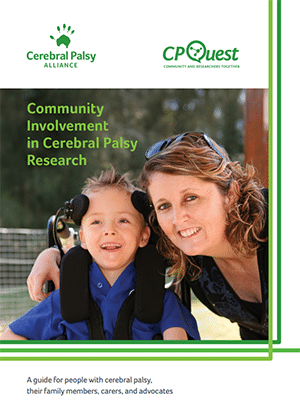
My name is Shannon Clough. I am very passionate about CP research and have proudly taken on the role as Chair for CP Quest. When my beautiful son Ethan was born at 26 weeks he was diagnosed as being profoundly deaf and having severe cerebral palsy. I, like so many parents, wanted answers and, even though I have now lost my beautiful boy, I still want those answers for people with cerebral palsy and their families. Cerebral Palsy Research is the way.
I invite you to join CP Quest and help guide CP research now and into the future. You can be involved as little or as much as you wish.
Your knowledge and experience is highly valued, and we need your help.
Joining CP Quest is an opportunity to:
We invite you to join CP Quest and share your lived experience of cerebral palsy as a research partner. For more information, please email us on cpquest@cerebralpalsy.org.au and or click on our expression of interest form.
Thank you for your interest in being a CP Quest member, your contribution as a person with CP and or a family member is invaluable to our research activities. As a research partner you will become a member of the research team. You will bring your lived experience to help the team, which could be at any stage of the research. For example, planning and making decisions about how research is conducted understand the findings, and sharing the results.
Involvement opportunities are flexible, and are offered via zoom meetings, phone, email, online or face to face.
All opportunities are distributed via email from cpquest@cerebralpalsy.org.au
The information you provide below is stored securely and you can opt out at any time via email.
Once we have received your form, well be in touch with the next step.
Thank you!