Welcome to the 2026 September Research Institute Newsletter. Bringing you recent updates about Professor Iona Novak AM, neonatal palliative care, anakinra for preterm infants and more!
This newsletter consists of short summaries of completed research led by the CPA Research Institute, our colleagues, international highlights, and information about CPA Research Institute studies which are currently recruiting.
Please see the glossary located at the bottom with definitions for bolded keywords used within summaries. Keywords in summaries will only be bolded the first time they are used.
If you have any suggestions/feedback for this newsletter or questions for the researchers, please contact us here.
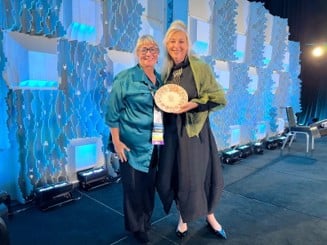
Professor Iona Novak AM was recently awarded with the 2026 American Academy for Cerebral Palsy and Developmental Medicine (AACPDM) Lifetime Achievement Award at the AACPDM 80th Annual Meeting in Philadelphia. This prestigious award recognises Iona’s outstanding contributions to research and her work improving outcomes for people with cerebral palsy and other childhood-onset disabilities.
Authors: Amit Trivedi, Nadia Badawi, Brian S Carter, Ahmed Moustafa, Anne Preisz
When a baby is receiving palliative care, decisions about providing food and fluids through medical treatments can be difficult for families and healthcare teams. This review discusses how these decisions should be based on what is most comfortable and beneficial for the baby, rather than assuming that medical feeding or hydration is always required. The authors highlight the importance of understanding each family’s values, beliefs, and goals of care and making decisions together with healthcare professionals. They recommend regularly reviewing the baby’s needs and focusing on comfort, quality of life, and family-centred care when considering nutrition and hydration in end-of-life situations. Find out more here.

Authors: Jia Li, David K Metz, Elys Green, Gergely Toldi, Robert Galinsky, Megan Clark, Rebecka Atkinson, Ina Rudloff, Josephine C Owen, Sara K DiSimone, Samuel C Forster, Steven X Cho, Atif Majid, Graeme R Polglase, Marcel Favilla, Pramod Pharande, Atul Malhotra, Calum T Roberts, Scott H Stansfield, Arvind Sehgal, Kenneth Tan, Alistair J Gunn, Philip J Berger, Alex Veldman, Rod W Hunt, Claudia A Nold-Petry, Marcel F Nold, Carl M J Kirkpatrick
Inflammation may contribute to brain injury in very premature babies, which can increase the risk of conditions such as cerebral palsy (CP). This study looked at how the anti-inflammatory medicine anakinra is processed in the bodies of extremely preterm infants. Researchers found that babies clear the medicine from their bodies more quickly as they grow during the first days after birth. Using computer modelling, they identified dosing schedules that are more likely to provide effective treatment while maintaining safety. These findings will help guide future clinical trials and support the development of more precise treatments aimed at reducing inflammation-related complications in preterm babies. Find out more here.

Authors: M Mercedes Ruiz Brunner, Carla Gil, María Elisabeth Cieri, Ana Laura Condinanzi, L Johana Escobar Zuluaga, Federico Sanchez, Gulam Khandaker, Israt Jahan, Nadia Badawi, Eduardo Cuestas
This study looked at common risk factors in people with cerebral palsy (CP) in Argentina and found that the patterns differed for those born preterm compared with those born at term. Children born preterm were more likely to have experienced complications linked to early birth, such as low birthweight, breathing problems, and longer stays in hospital. For children born at term, factors such as limited access to prenatal care, birth complications, and social challenges were more common. Understanding these different risk factor patterns may help healthcare providers identify children at risk earlier, improve support for families, and guide strategies to prevent CP where possible.

Research studies and clinical trials are a vital way to identify breakthroughs and advancements in the treatment and prevention of cerebral palsy.