Welcome to our 2026 April Research Institute Newsletter.
This newsletter consists of short summaries of completed research led by the CPA Research Institute, our colleagues, international highlights, and information about CPA Research Institute studies which are currently recruiting.
Please see the glossary located at the bottom with definitions for bolded keywords used within summaries. Keywords in summaries will only be bolded the first time they are used.
If you have any suggestions/feedback for this newsletter or questions for the researchers, please contact us here.
Congratulations to the Philippine Cerebral Palsy Register (PhilCP) on receiving an Incubator Grant from the Sydney Southeast Asia Centre (SSEAC), the University of Sydney.
Led by Professor Nadia Badawi AM and Professor Gulam Khandaker, this collaborative initiative between Cerebral Palsy Alliance Research Institute, SSEAC, Philippine General Hospital, Philippine Children’s Medical Center, and the Global LMIC CP Register will establish the first national cerebral palsy (CP) surveillance platform in the Philippines. Based initially in Metro Manila, PhilCP will register >500 children and generate important information and highlight service gaps to inform policy, strengthen research capacity, and improve access to evidence-based services across the Philippines and Southeast Asia. Read more here.

Authors: Shona Goldsmith, Sarah McIntyre, Nadia Badawi, Bernard Dan, Steven Day, Kate Himmelmann, Sandra Julsen Hollung, Bo Jacobsson, Gija Rackauskaite, Robert J Reynolds
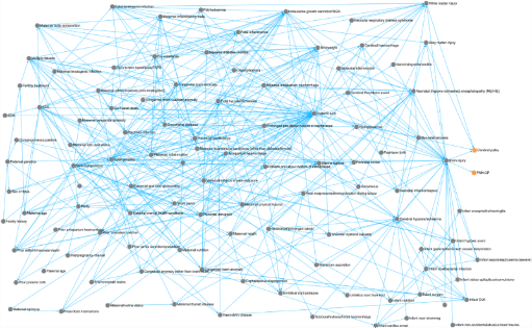
Over many decades, researchers have explored the many risk factors and causes of cerebral palsy and how they connect. In this study, authors brought these factors together in one place, to create a visual diagram about “causal pathways” to cerebral palsy. The international team used a new method to combine evidence, information from experts, and feedback from key groups to develop the first “Cerebral Palsy Directed Acyclic Graph” (CP‑DAG). They now call on the community to join the collaboration to expand and improve this first version of the CP-DAG. New studies are planned from the CP-DAG to better understand some pathways to CP, as well as identify key opportunities to protect the brain. Finally, the authors will be exploring whether people with CP and families would find the CP-DAG a useful tool to understand their own story. Find out more here.
Authors: Si Long Jenny Tou, Seth A Warschausky, Petra Karlsson, Jane E Huggins
This study looked at how to improve brain‑computer interfaces (BCIs), which allow people to communicate using brain signals instead of physical movement. Researchers focused on people with cerebral palsy (CP) and tested whether choosing the best locations for brain sensors for each person could improve performance. They found that customizing these sensor locations made a big difference for people with more severe CP, improving how accurately the system worked. However, it made less of a difference for people with milder CP. The findings suggest that tailoring BCI setups to each individual could make these technologies more useful and accessible for people with complex communication needs. Find out more here.

Authors: Stephanie Lackey, Véronique Légaré, T Claire Davies, Petra Karlsson, Shane Pinder, Beata Batorowicz
This study explored how services that support people who use communication aids, such as Augmentative and alternative communication (AAC), could be improved in Ontario, Canada. Clinicians shared their experiences and ideas through group discussions. They emphasised that good AAC support is about more than just providing equipment—it should focus on the whole person and their daily life. Participants highlighted challenges such as limited access to services, strict funding rules, and inconsistent support. They called for more flexible, personalised care, better training for clinicians, and support delivered in everyday environments like home and school. Overall, the study highlights the need for more accessible, inclusive, and person‑centred communication services.

Authors: Susan M Reid, Gina L Hinwood, Angela T Guzys, Rod W Hunt, Dinah S Reddihough
This study looked at why rates of cerebral palsy have been decreasing over time in Victoria, Australia. Researchers used information from a large population database of children born between 2000 and 2019. They found that the biggest improvements were in children who experienced complications around the time of birth, especially those born very early or more mature newborns who had experienced reduced blood flow or oxygen to the brain. Rates did not change much for children with cerebral palsy from other causes. Overall, the findings suggest that ongoing improvements in care of the mother and baby around the time of birth are helping to reduce cerebral palsy rates. Find out more here.

Authors: Natalia Rode, Hayley Smithers-Sheedy, Kath Swinburn, Tanya Tripathi, Emma Waight, Lisa Hui
This study explored how doctors talk to pregnant women about preventing cytomegalovirus (CMV), a common infection that can sometimes lead to disabilities such as hearing loss, epilepsy, or cerebral palsy in babies. Doctors said an online training program helped improve their knowledge and confidence, but many found it hard to include CMV advice in routine appointments. Challenges included limited time, lack of clear resources, and concerns about overwhelming or worrying patients. Suggested solutions included better information materials, reminders in clinic systems, and sharing information across multiple visits. Overall, the study highlights the need for better support to help clinicians provide clear, consistent prevention advice. Find out more here.

Authors: Bart Bolsterlee, Brian V Y Chow, Suzanne Davies, Catherine Morgan, Caroline D Rae, David I Warton, Iona Novak, Ann Lancaster, Gordana C Popovic, Mahsa Seydi, Claudia Y Rizzo, Iain K Ball, Robert D Herbert
This study looked at the calf muscles of children with cerebral palsy to better understand how they grow and function. Using advanced imaging (MRI) scans, researchers compared children with cerebral palsy to typically developing children. They found that muscles in children with cerebral palsy were generally smaller and had shorter fibres, which can affect strength and movement. However, different muscles adapt in various ways, with some helping to preserve strength, and others assisting to maintain movement range. These changes also varied between children. The findings highlight that muscle differences in cerebral palsy are complex, and care and treatments may need to be tailored to each child and specific muscle. Find out more here.

Research studies and clinical trials are a vital way to identify breakthroughs and advancements in the treatment and prevention of cerebral palsy.

Augmentative and Alternative Communication (AAC): Tools, systems, or methods that help people communicate when speech is difficult or not possible (e.g., communication boards, devices).
Brain–Computer Interface (BCI): A technology that allows people to communicate or control devices using brain signals instead of physical movement.
Calf muscles: Muscles located at the back of the lower leg, important for walking, balance, and movement.
Causal pathways: Chains of events or factors that lead to a particular outcome, such as a condition or disease.
Cerebral Palsy (CP): A complex physical condition that affects how a person’s muscles work and how they move throughout their lives. It is caused by early damage to part of the brain, which doesn’t worsen over time but it’s consequences can become more impactful. Each person with CP is unique, and while all having some degree of physical disability, many experience additional learning, communication, visual and/or other challenges. (Dan et al., 2026)
Clinicians: Healthcare professionals, such as doctors or therapists, who provide patient care.
Cytomegalovirus (CMV): A common virus that can cause harm to a developing baby during pregnancy
Magnetic Resonance Imaging (MRI): A medical imaging technique that uses magnets and radio waves to create detailed images of the body.
Population database: A large collection of data about a group of people used for research.